
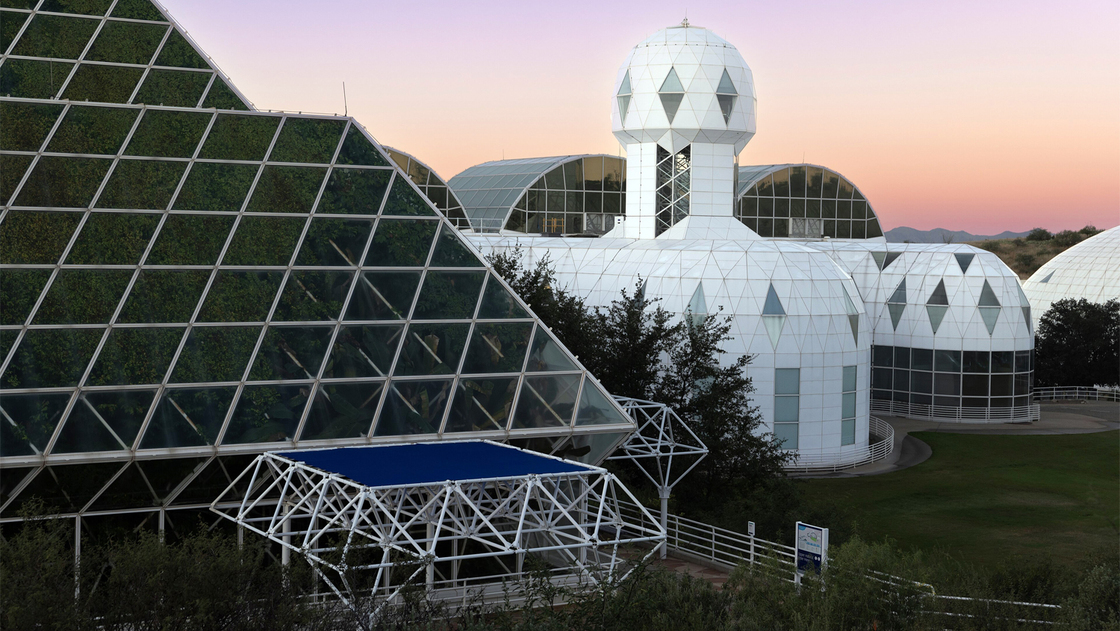
In the late 1980s, out in the sunbaked expanse of the Arizona desert, a bold, almost dreamlike experiment took shape. It was called Biosphere 2. Planet Earth was viewed as Biosphere 1, an essentially closed system in which life is sustained through the continual recycling of its materials. Biosphere 2 was supposed to be a scaled-down version of the same basic thing: an entire ecosystem—including people—in a sealed environment of 3.14 acres. The people were intended to live in the futuristic facility for years with all their food, water and air generated inside. Nothing in; nothing out.
Scientists and visionaries saw Biosphere 2 as a proving ground for the future. It was a first step toward creating self-sustaining habitats that might one day exist on the moon, Mars and beyond.
But within a few months of the project’s start date in September 1991, food production fell to worrying levels. The underfed crew suffered significant weight loss. At the same time, some species died off while others exploded to problematic numbers, including certain insects that exacerbated food shortages. As the months went on, oxygen levels dropped so low that the Biospherians became sick, making their farming work very difficult. Eventually the situation required a “cheat” of pulling outside air into the facility. Social tensions also soared, causing the hungry and isolated people to split into factions hostile toward each other.
The Biosphere 2 project was dissolved in frustration in September 1993, without having achieved its goals. Yet a great deal was learned through the failure.
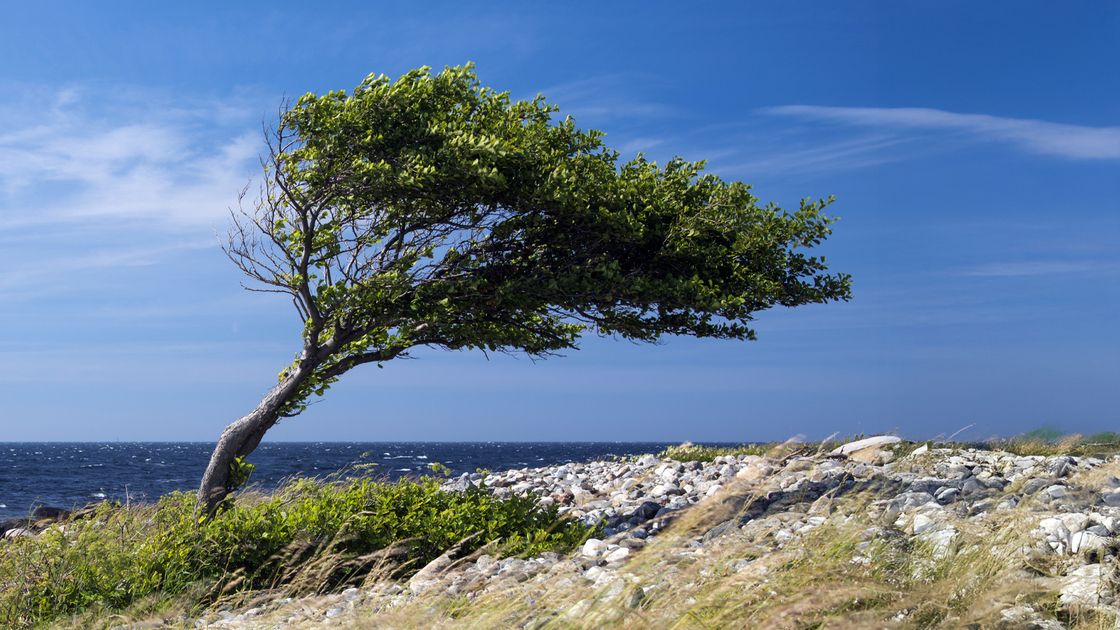
One of the most fascinating findings concerned trees planted in the facility’s rainforest area. Many of these trees grew quickly, but then toppled over before reaching maturity. The creators of Biosphere 2 had not understood that young trees require wind if they are to mature properly. This is because blowing wind bends a tree, pulling the roots on the windward side while pressurizing the wood on the opposite side. This causes the root system to grow deeper and broader to anchor the tree in place, and it makes the cells of the pressurized wood alter their structure to become more robust.
The modified cellular structure is known as reaction wood, or stress wood. Trees exposed to strong winds early in life develop the roots, stress wood and strength to endure even greater forces as they mature. But trees grown in sheltered greenhouse conditions are likely to collapse under their own weight before reaching maturity.
This phenomenon is a powerful metaphor for each of us. As the Apostle Paul wrote in Romans 5, “[W]e glory in tribulations also: knowing that tribulation worketh patience; And patience, experience; and experience, hope: And hope maketh not ashamed; because the love of God is shed abroad in our hearts by the Holy [Spirit] which is given unto us” (verses 3-5).
Likewise, James 1:2-4 state: “My brethren, count it all joy when ye fall into divers temptations; Knowing this, that the trying of your faith worketh patience. But let patience have her perfect work, that ye may be perfect and entire, wanting nothing.”
We do not live within a suffering-free bubble like Biosphere 2, and that is ultimately to our benefit. When winds buffet us, we can take comfort knowing that this is forging resilience, hardiness and character in us as nothing else could. It is helping us reach maturity with the strength to become like the man compared to the tree in Psalm 1:1-3, who yields fruit in its season and whose leaves do not wither.