
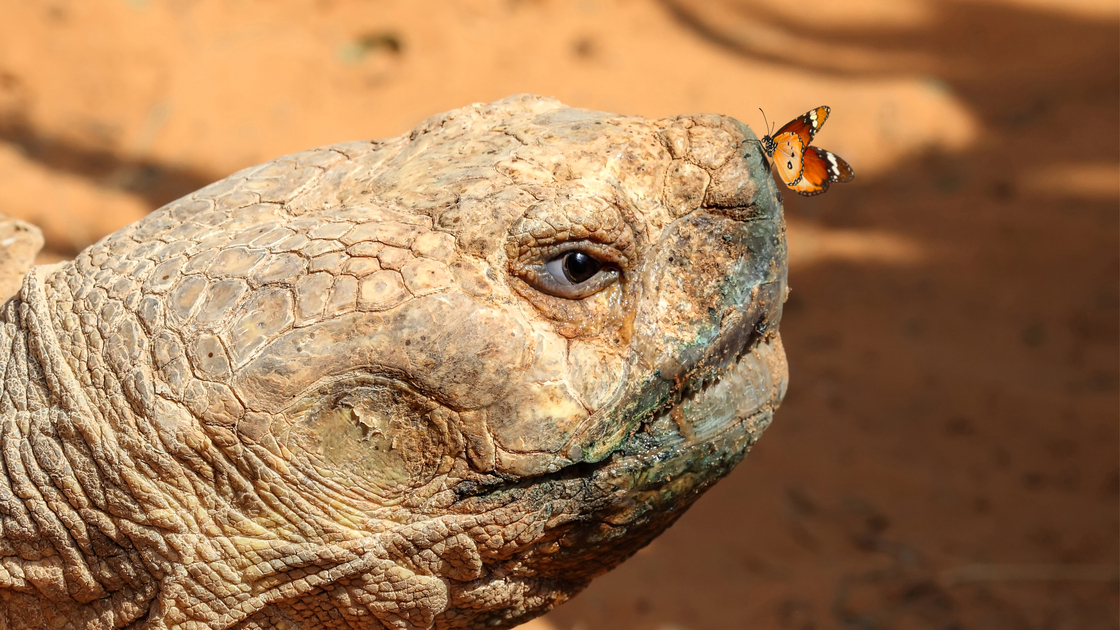
How many individual creatures—from the greatest to the smallest—are in the animal kingdom for each human on the planet? Take a guess: Just how numerous is the animal kingdom? The answer will inspire greater appreciation for the mind and power of the Lifegiver, the great Creator.
First, a disclaimer: We don’t know exactly how many of any kind of animal there are. Remarkably, God does know the precise number of these creatures. But the numbers below are broad estimates from copious sources.
Let’s break down the problem. We can divide the animal kingdom into vertebrates and invertebrates. We’ll start with vertebrates—creatures with spines and skulls.
Birds are vertebrates: 50 billion birds soar in our skies. Actually, 1 in 10 birds are chickens, but they don’t soar quite as much. Sparrows are important (we’ll discuss them at the end); they comprise 10 percent of the bird population.
Mammals are also vertebrates. They total 150 billion. The numbers don’t favor either side in the never-ending debate on cats vs. dogs: There are 1 billion of each. Two thirds of mammals are domesticated livestock; the remainder are wild.
The next group of vertebrates are hard to catch and hard to count: 2.75 trillion fish.
Another group occasionally dips its feet in the water: amphibians. With all the frogs, salamanders and so forth, we can add another 20 billion to our number.
The last group of vertebrates is a bit of a mixed bunch; we call them reptiles. There are 30 billion of them. That’s a lot of snakes, lizards, turtles and such.
To sum up so far, Earth is home to 3 trillion vertebrates. The weighted average lifespan of a vertebrate is seven years, so many more individual creatures will exist in one human lifetime.
What we have so far is remarkable. However, vertebrates are numerically tiny in the animal kingdom. They comprise less than one 10-millionth of all animals! We must include the invertebrates in our count.
Insects are a key group of invertebrates. When we add up all the bugs, bees, butterflies, beetles and so on, we learn that there are 10 quintillion insects! That’s a 10 with 18 zeros after it! Yes, some insects can be annoying, but most go quietly about their business fulfilling vital roles in our ecosystem. Consider the ant: There are 20 quadrillion of them! That’s a 20 with 15 zeros after it—strung out like a trail of ants. That means there are 2.5 million ants for every person on Earth. Maybe the number you thought of earlier needs revising.
When we add in non-insect invertebrates—crustaceans, spiders, mollusks, worms, nematodes (yes, they are animals too) and more—our numbers skyrocket further. These creatures add hundreds of quintillions to our total.
Here is our total: The best scientific order-of-magnitude upper estimate for the total number of individual animals alive on Earth right now: 1,000,000,000, 000,000,000,000. That is 1 sextillion (21 zeros!). And here’s the answer to our question: For each person on the planet, how many individual creatures are there? 120 billion.
These colossal numbers teach us the incredible capacity of the Creator’s mind. The Apostle Paul wrote that “no creature is hidden from God” (Hebrews 4:13; New English Translation). However, as much as He is attentive to and preserves all His creation, His focus is not so much on the 1 sextillion animals alive on Earth. He is far more interested in you.
Jesus Christ comforted His disciples by saying that “not a single sparrow can fall to the ground without your Father knowing it. … So don’t be afraid; you are more valuable to God than a whole flock of sparrows” (Matthew 10:29, 31; New Living Translation).
When you endure trial, experience discouragement, lose a loved one, struggle to make ends meet, fret with fear, or face whatever difficulty, remember: You are more valuable to God than the myriads of creatures. He knows exactly what is on your mind and sees all your concerns. And remarkably, you can talk to Him about those things. What a blessing it is to have a relationship with the heavenly Father, the Creator of all creatures great and small.