
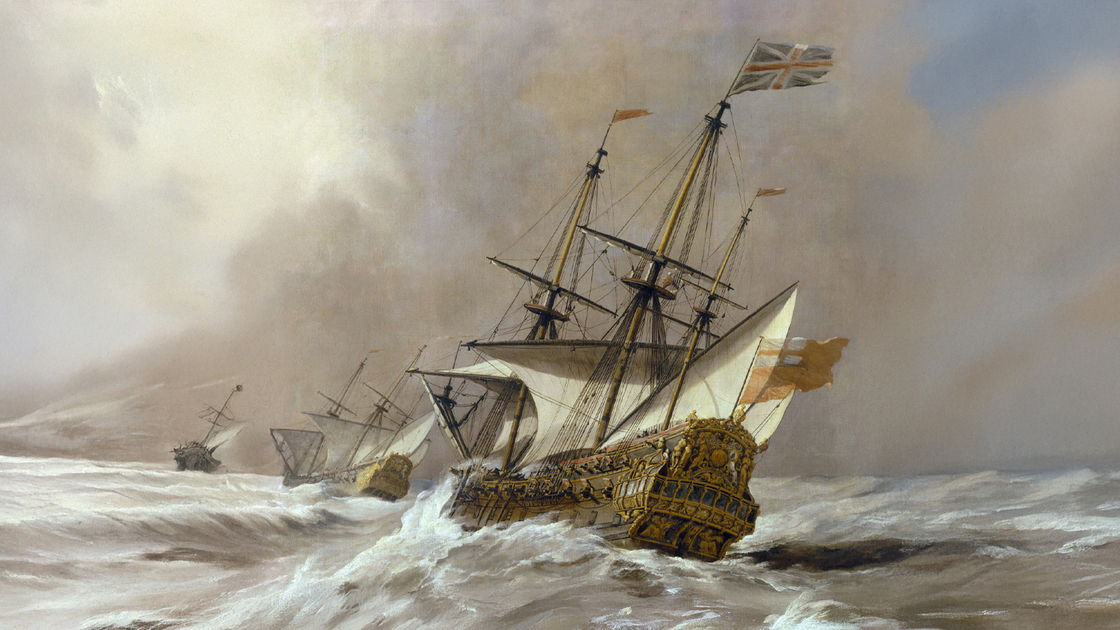
Recently I flew over the Pacific Ocean. Despite the incredible distance, the nighttime flying and the absence of landmarks, the pilots had no problem navigating to the far side of the world—on time and on location. It’s astonishing to think about, sitting inside a slender metal tube 40,000 feet above the massive expanse of Earth, cruising at 550 miles per hour for 15 hours on that 7,500-mile journey.
Imagine explaining this present-day reality to a bedraggled sailor on the high seas from 250 years ago. To him, it would be incomprehensible. For us, such commonplace travel is easily taken for granted. Every day, 1,800 flights crisscross that vast ocean.
What made this flying experience more meaningful for me was the book perched on my tray table. I was reading about Capt. James Cook and his adventures 250 years earlier sailing the same ocean below. That man traversed the globe by boat to explore and expand the limits of the known world. Through masterful seamanship, navigation and cartography, Cook transformed mankind’s understanding of world geography.
Modern air travel is easily underappreciated. So is the colossal work of a great explorer like Cook who helped enable global travel today.
As I was reading, Cook’s exploration experiences evoked thoughts of another great explorer: Herbert W. Armstrong. He was an explorer of another expansive, deep and mysterious world: the Holy Bible. In this case, God had to open his mind to understand the Bible’s mysteries. But Mr. Armstrong also had to study diligently. We can easily take for granted his Spirit-led exploratory work that enables our clear biblical understanding today.
Let’s consider some fascinating comparisons between the explorations of these two great men.
Early Experience
James Cook had a modest beginning. Born in 1728, he was raised in a cottage of mud and thatch in Great Ayton, a village near England’s east coast. His father was a farm manager, and James received little formal education. In his teen years, Cook moved to Whitby, a town of seagoing industries facing the North Sea. “There, starting as an apprentice, he worked his way up through the merchant navy, serving on sturdy vessels … designed to haul coal and timber. He learned how to manage the collier ships [which he would later use to traverse the globe], how to read the mercurial storms of the North Sea, how to use dead reckoning and trigonometry to plot his location along complicated shorelines” (Hampton Sides, The Wide Wide Sea).
Cook was ambitious, curious and adventurous. He saw limitations in the merchant navy, whereas the Royal Navy offered new opportunities and the potential for loftier career advancement.
“But at the not-so-young age of 27, on the verge of promotion to become commander of a merchant vessel, he quit the coal ships and volunteered for the Royal Navy. He started all the way back down the ladder as an ordinary seaman, but quickly climbed the ranks” (ibid).
Abilities and experience acquired during his merchant days readily translated to his naval career. He was a genius surveyor, hydrographer and mapmaker. “Cook’s cartographic prowess, aided by his growing talent as an astronomer and mathematician, caught the attention of high officials within the Admiralty, especially after he earned the title of king’s surveyor and produced, during several summer seasons, an elegant and painstaking map of Newfoundland, a glacier-carved island with one of the most intricate shorelines in the world. Comparing it against modern satellite images of Newfoundland, one can see his chart was a cartographic masterpiece of almost chilling precision.”
Herbert W. Armstrong also had a modest beginning, with little formal education. But with Cook-like ambition and curiosity, he charted his own course of education with the aim of becoming a prominent advertising man. “These years of self-assigned study, enforced mental activity, contacts with successful men in many varied fields, coupled with the practical experience that had been mine, had produced an education and training superior to the average college education,” he wrote in his autobiography.
When God introduced Mr. Armstrong to the truth, He was exposing it to a man who had previously demonstrated discipline, drive and focus in his studies, with the ability to research and record his findings. Like Cook, abilities and experience acquired in his younger years readily translated to a new adventure of biblical exploration (2 Timothy 2:15).
Exhaustive Exploration
By 1768, Cook’s value was widely recognized, and he was rewarded with his first round-the-world voyage of exploration. During the three-year journey, he covered more than 100,000 nautical miles, witnessed and documented the transit of Venus—an important development in the search for exoplanets today—and “explored the broad expanses of the South Pacific, charting the east coast of Australia and both islands of New Zealand, among other lands virtually unknown to Europe,” Sides explains.
After returning home for a year, he set out on a second three-year global circumnavigation. By the time of his return, Cook had “become a very important figure, a celebrity, a champion, a hero,” Sides wrote. “He had ventured into the frozen basement of the world and come back with important findings and magnificent maps of unfamiliar realms.” This voyage “sealed his reputation and catapulted him into the pantheon of English explorers.”
After another 12-month respite at home, Cook couldn’t pass on the opportunity for a third voyage. It would be his last, cut short by his untimely death during a skirmish with Hawaiian natives in 1779.
What lay in the uncharted portions of the planet stoked Cook’s curiosity and motivated exploration. The land masses of Earth were parts of a jigsaw puzzle he had to piece together one island at a time.
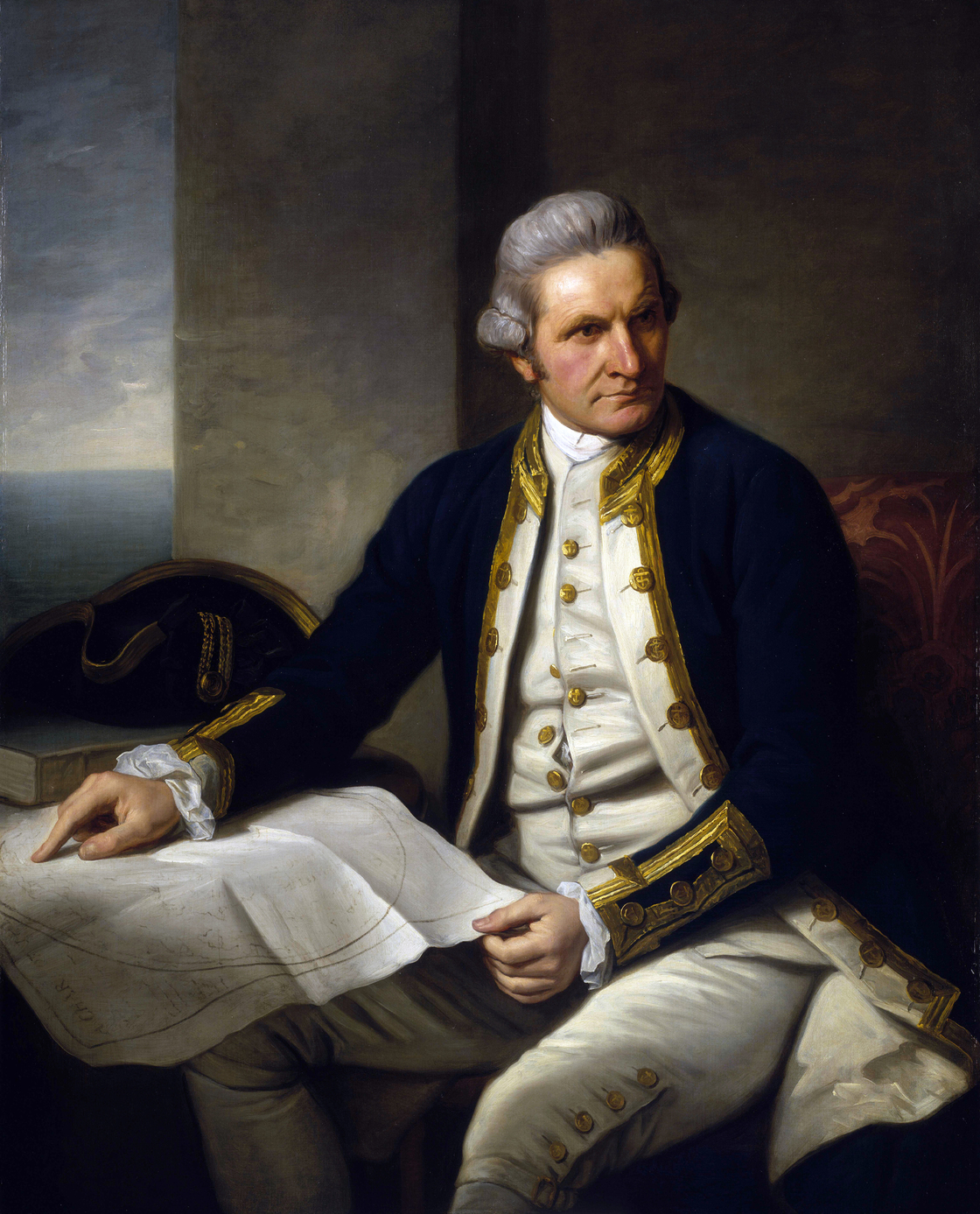
When Cook saw land, every detail caught his attention: the orientation of headlands, the behavior of tides and currents, the depth of the sea, and the specifications of shoals, rocks and cliffs. He recorded information about bays, harbors and coastal features useful for navigation. He studied local flora and fauna and collected samples for further analysis.
He did this exhaustively, all over the globe. The world map became clear in Cook’s wake.
Similarly, following a challenge about Sabbath-keeping from his wife in 1926, Mr. Armstrong entered a six-month night-and-day study of the Bible to prove her wrong. She was right, and he came to see real authority in the Bible. With his mind opened to the truth, coupled with curiosity and motivation to learn more, the night-and-day study continued for another three years. It was a voyage of exploration—biblical exploration.
Mr. Armstrong related in his autobiography, “I delved into intensive research in the commentaries, Bible encyclopedias, Bible dictionaries, comparing various translations of the Bible, examining Greek and Hebrew texts of doubtful or questionable passages, checking with lexicons and Robertson’s Grammar of the Greek New Testament. I made an intensive study of ancient history in connection with biblical history and prophecy.”
His studies were thorough and tireless. His research was objective, he didn’t cut corners, and no stone was left unturned. He studied the Bible the way Isaiah 28:10 says it should be studied.
“As this study of the Bible continued,” Mr. Armstrong wrote, “I was forced to come out of the fog of religious Babylon a single doctrine at a time. It was years later before I came to see the whole picture—to understand God’s purpose being worked out here below, and why, and how, He is working it out. Like a jigsaw puzzle, the many single doctrinal parts ultimately fit together, and then, for the first time, the whole picture burst joyfully into view” (ibid).
Exposing Error
The main goal of Cook’s second voyage had been to “prowl the southern oceans and determine the existence, or nonexistence, of a hypothetical continent known as Terra Australis Incognita” (op cit). Scientists had assumed this landmass existed to counterbalance the Northern Hemisphere’s terrain. Cook’s voyage disproved this idea. Sides explains that “Cook had made an important contribution to ‘negative discovery’—that is, finding nothing where something was widely presumed to be.”
False ideas about the world’s geography were ubiquitous. One objective for his third voyage was a renewed search for the Northwest Passage, a navigable channel across the northern part of Canada that would connect the Atlantic to the Pacific. The search was another futile endeavor. One biographer said Cook had become an “executioner of misbegotten hypotheses” (ibid).
Cook couldn’t use guesswork, opinions or theories to chart supposed locations. For geographic verification, he ventured directly to the source. Where he discovered and explored land, he meticulously added the details to his maps.
Mr. Armstrong’s experience was similar. While God taught him the plain truth of the Bible, he simultaneously disproved the false religious ideas of man’s imagination. “I had to examine every doctrinal tree in the religious forest,” he continued in his autobiography. “Many, as I had been brought up to believe them, were felled on close examination in the Bible. New doctrinal trees came into view. But finally, after years, I was able to see the whole forest of truth, with dead doctrinal trees removed.”
Thereafter, anyone whose mind is opened by God to His precious truth doesn’t have to study the false ideas of man to learn what is truth. The truth frees us from the deceit and dangers of religious deception (John 8:31-32). Proving God’s truth is a personal necessity, but doing so is far easier because of Mr. Armstrong’s exploration.
Expedient Education
In Cook’s time, determining the precise location of his ship had its challenges. Latitude—his position north or south—could be calculated with standard tools in conjunction with the precise angle of the sun in the sky. “Longitude—how far west or east one was—was significantly harder to measure, especially while tossing about at sea,” Sides explains. “Geographers, thinkers, and inventors had been trying for centuries to come up with a method, or an instrument, that could reliably fix this elusive but all-important piece of data.”
How this conundrum was solved is a fascinating slice of history. On Cook’s second journey he carried an instrument that transformed maritime navigation. It was a seagoing clock, known as a marine chronometer today, that kept an accurate reference time set at a predetermined location, which could be compared with the current time at the ship’s location based off the position of the sun. This clock, called K1, could “endure the unusual shocks and stresses a long ocean voyage entailed.” With it, Cook could figure out longitude, and “lands and features could now be placed on maps with a facility and precision unknown before” (ibid).
This compact little clock in the hands of a master explorer contains a powerful lesson for us. “For something so small and compact, the implications of this practical seagoing clock were immense. The device allowed Cook, or any future voyager, to know exactly where he was on the globe. More importantly, it enabled him to pinpoint the locations of all the new lands and features he has encountered, so that the next navigator could quickly and reliably relocate them” (ibid; emphasis added).
The comparison to our biblical education today is plain. “That is why students at Ambassador College today are able to learn the truth much more rapidly than I could,” Mr. Armstrong wrote. “That is why the readers of the Plain Truth, the regular listeners of the World Tomorrow program and the students of the Ambassador College Bible Correspondence Course are able to come to mature knowledge of the truth so quickly. The pioneer work has been done” (op cit).
It is so easy to take the history of this great Bible explorer for granted. Never forget that Mr. Armstrong mapped the Bible. What he did is an incredible personal blessing. Our spiritual survival and growth in the understanding of God’s Word stem from his exploration.
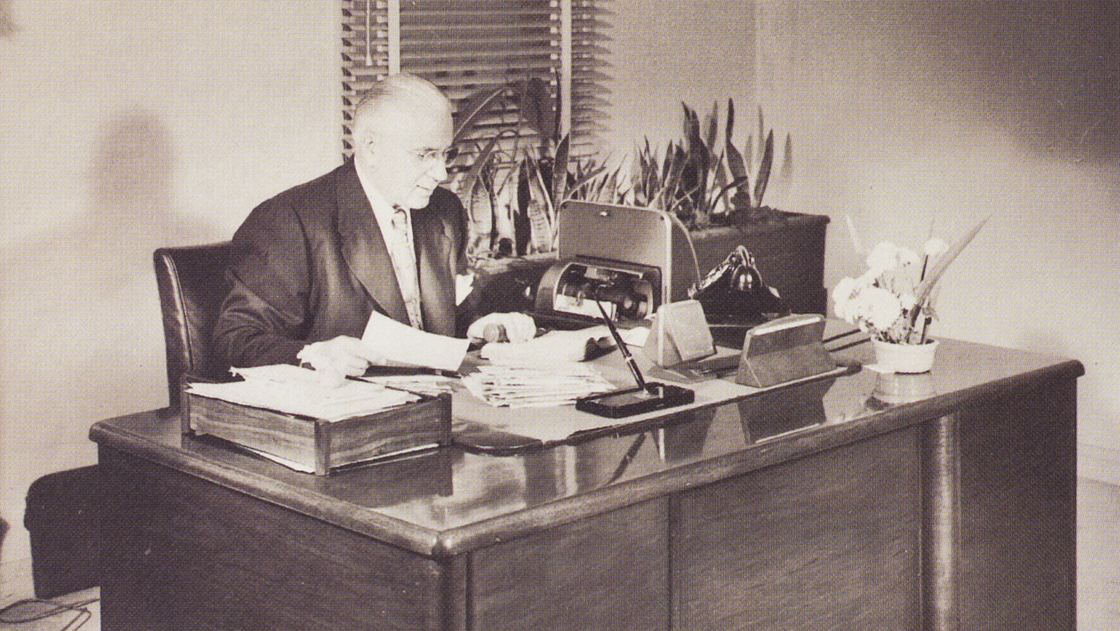
The Apostle Paul admonished us to be thankful for receiving such understanding. To the congregation in Colosse he wrote, “As ye have therefore received Christ Jesus the Lord, so walk ye in him: Rooted and built up in him, and stablished in the faith, as ye have been taught, abounding therein with thanksgiving” (Colossians 2:6-7). Notice the connection Paul makes: To remain rooted, built up and established in what we have been taught, we must always be thankful for the truth. “Paul warned us to give God thanks all the time, because we’ve been taught so much,” Gerald Flurry writes. “We must love this teaching so much that we become rooted and grounded in it” (The God Family Vision). The more thankful we are for those truths, the more firmly we will hold them fast.
Extra Edification
We must look to the Source of truth and align our thinking with how He instills truth into His Church. Mr. Armstrong directed our attention to that Source. “But thanks and praise to God, He has restored knowledge,” he said in a 1983 sermon. “That is all God’s doing. None of us can be anything more than human instruments. If I have been willing to do anything, it is only because God Himself brought about circumstances to compel me and make me willing, whether I wanted to be or not; and even then I can take no credit whatsoever. It was all the doing of God, through Jesus Christ.”
Realize, Jesus Christ didn’t just hand these truths over on a platter. Mr. Armstrong had to explore his Bible to learn them. Appreciating his meticulous process of biblical exploration should also deepen our gratitude for the truth.
Since the era of Cook’s exploits, mankind has learned more from the vast ocean of knowledge about the geographic world. That post-Cook reality contains a vital lesson for us spiritually. In the 40 years since Mr. Armstrong’s death, more has been added to what he taught—but only for those who have held fast to what he taught.
The Apostle Peter tells us, “Wherefore I will not be negligent to put you always in remembrance of these things, though ye know them, and be established in the present truth” (2 Peter 1:12). “We have the same truth God gave Mr. Armstrong, and, just as with him, that truth has grown, deepened, widened, multiplied,” Mr. Flurry wrote. “God has continued to bless us, as He did Mr. Armstrong, with new revelation. The living God did not stop speaking to His people when Mr. Armstrong died. He continued to give His people ‘present truth’ (2 Peter 1:12) that builds on the foundation of the truth He restored through Mr. Armstrong” (Philadelphia Trumpet, February 2020).
Receiving present truth, new revelation, through God’s apostle today is further reason to be thankful for Mr. Armstrong’s biblical exploration.
Exhilarating Endeavor
Where are you on your spiritual voyage? Hopefully you are at full sail and enjoying steady winds. But maybe not. Are you drifting listlessly on a still sea with meager provisions and low morale? Are you moored at a distant, secluded port, captivated by the culture of a foreign land? Are you shipwrecked on rocks that caught you off guard after ignoring the charts and advice from those around you? Are you lost at sea, in a dense fog hiding the sun and stars as tools of navigation? In any of these circumstances, you need a map to get back on course.
Just as the sailors who followed Cook relied upon his maps, we all need the map charted by Herbert W. Armstrong. It’s God’s map, really.
God’s map will clearly indicate the dangers to avoid on your voyage. It will lift your spirits for an exciting adventure of ongoing exploration. It will align your course with the loftiest aims of God’s imperial ambition. And it will leave a wake for others to follow. Let God fill your sails and lead you in your most exhilarating endeavor.