
Imagine being alive when Jesus Christ walked the Earth. Imagine knowing Him, talking with Him, relaxing with Him. The Bible indicates that He had an attractive personality; He was a positive and friendly man.
Though He spent a lot of time with 12 men in particular, He also had several female friends and disciples. One of these did something that made Christ say, “Wheresoever this gospel shall be preached in the whole world, there shall also this, that this woman hath done, be told for a memorial of her.”
That’s quite a statement! What a woman this must have been. What did she do to warrant such praise?
‘One Thing Is Needful’
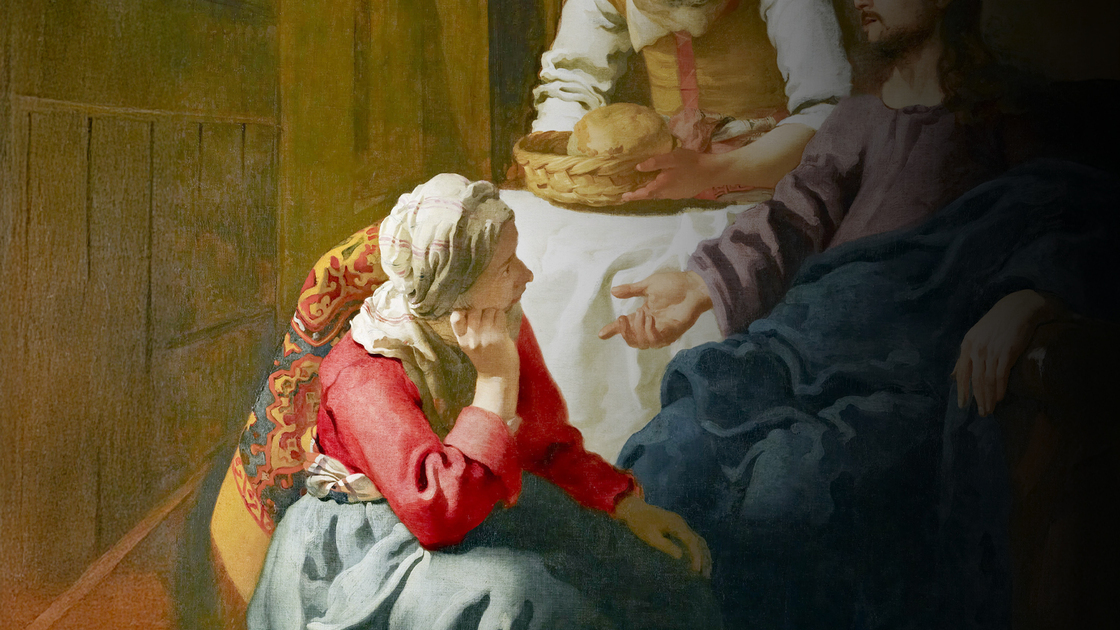
The first mention of this woman is in Luke 10. Christ entered the village of Bethany, at the base of the Mount of Olives, just 2 miles from Jerusalem, and a woman named Martha received Him into her house (verse 38).
Verse 39 then says, “And she had a sister called Mary, which also sat at Jesus’ feet, and heard his word.” Mary “sat at Jesus’ feet,” meaning she was learning from Him (see Acts 22:3)—she was one of His students, or disciples.
“But Martha was cumbered about much serving, and came to him, and said, Lord, dost thou not care that my sister hath left me to serve alone? bid her therefore that she help me” (Luke 10:40). It is a woman’s God-given role to serve and take care of the house. There is great glory in that job. Martha was no doubt excellent at what she did. But she was “cumbered about much serving,” or distracted and over-occupied.
In Martha’s defense, she was preparing a meal for the Son of God! But she was so bothered by Mary that she brought it up to Jesus: Doesn’t it bother you that I’m doing all this myself? Could you tell Mary to get up and help me? Perhaps she was serving with the wrong motive, or without pure, godly intent.
“And Jesus answered and said unto her, Martha, Martha, thou art careful and troubled about many things: But one thing is needful: and Mary hath chosen that good part, which shall not be taken away from her” (verses 41-42). Jesus’s correction was gentle. The language here appears to be a friendly exhortation partly to defend what Mary was doing. But Christ did tell her what her problem was, and it was not that she was serving. It was that she was anxious or disturbed. She was getting distracted with physical things.
“[O]ne thing is needful,” Christ said. This is true of all of us at any given time! Often we have several competing demands on our energy and time. We need to look to God for help in determining what one thing is needful at any given moment, and then fully focus on it.
Martha needed perspective, and Christ helped her gain it. The physical is important, but we need a spiritual emphasis. Martha thought, If the Messiah is here, then we can honor Him by preparing all this food and entertainment and making Him comfortable. Mary was more on target. She knew why Christ was there: to teach. So the way to honor Him was by listening. Sure, make sure He’s comfortable and has something to eat, but then listen and learn.
If we see the meaning and the vision in our physical responsibilities, then we will prioritize the spiritual. As long as we have the right motive behind it all, we will have things in the right order.
What you see in both women, however, is that Jesus was the best friend of the family. They loved Him dearly and wanted to serve Him and learn from Him. This makes them both admirable. What a woman who applies the qualities of both women: hanging on every word of Christ and learning how to serve, manage and guard a house!
A Miraculous Resurrection
Christ praised a towering act of faith committed by Mary of Bethany. Before we look at the special act Christ spoke of, let’s see a miracle Mary witnessed that informed and strengthened her faith.
When Jesus returned to Bethany, Martha and Mary’s brother Lazarus had been dead four days. By this time, many Jews had come to comfort the two sisters, meaning Christ’s miracle would soon be witnessed by many people—making it that much more powerful.
You can study this miracle in John 11 (our free booklet John’s Gospel—The Love of God also explains it in detail). Jesus was actually foreshadowing His own resurrection. When Christ was later resurrected, the disciples had such a hard time understanding it was really Him! It seems that Mary of Bethany, however, got that lesson from Lazarus’s resurrection!
When Mary heard Jesus had come, she went outside immediately to meet Him, and several Jews who had come to comfort her followed. “When Jesus therefore saw her weeping, and the Jews also weeping which came with her, he groaned in the spirit, and was troubled” (verse 33). Christ then asked where they had laid Lazarus.
When the people removed the stone from Lazarus’s grave, Jesus uttered a short prayer, thanking God for the miracle He was about to perform. Soon after, a man bound in graveclothes from head to foot emerged from the grave. Lazarus was brought back to life!
Notice what this miracle did: “Then many of the Jews which came to Mary, and had seen the things which Jesus did, believed on him” (verse 45). The quiet, obedient, humble Mary led a multitude to Jesus Christ to see the greatest physical miracle He performed in His life!
Can your example lead people to see God’s miracles? Can you demonstrate fruits in your life that inspire people to want to believe and obey God?
Dinner Before Christ’s Death
Some people told the Pharisees about this miracle, and this stirred their hatred (John 11:46-53).
This occurred just before Christ’s last Passover: “Then Jesus six days before the passover came to Bethany, where Lazarus was which had been dead, whom he raised from the dead. There they made him a supper, and Martha served …” (John 12:1-2). It appears this meal was to celebrate Lazarus’s resurrection. Imagine eating again with a man who had fallen sick and died several days before!
What a beautiful statement about a woman of the Bible: She served.
It seems now that Mary’s faith hit a new high: “Then took Mary a pound of ointment of spikenard, very costly, and anointed the feet of Jesus, and wiped his feet with her hair: and the house was filled with the odour of the ointment” (verse 3). Not only was the ointment very costly, Mary had to break the box to get it out; the box was probably worth a lot too (Mark 14:3).
Note what happened next: “Then saith one of his disciples, Judas Iscariot, Simon’s son, which should betray him, Why was not this ointment sold for three hundred pence, and given to the poor?” (John 12:4-5). Judas estimated this to be worth nearly the annual salary of a working man. But he didn’t want to donate the money to the poor; he wanted to steal it (verse 6).
Christ responded, “Let her alone: against the day of my burying hath she kept this. For the poor always ye have with you; but me ye have not always” (verses 7-8). How often is the Son of God sitting at your table? And He wouldn’t be on Earth much longer.
In Matthew’s account, Jesus said: “Why trouble ye the woman? for she hath wrought a good work upon me. … For in that she hath poured this ointment on my body, she did it for my burial” (Matthew 26:10, 12). Jesus had explained that He was going to Jerusalem to die. Though the disciples didn’t quite understand, He patiently kept explaining it. Mary seems to have understood this better than the 12 disciples!
To have the Son of God sacrifice Himself, in His beating and death, means that, upon repentance, we can now be forgiven of breaking God’s perfect, loving law—because the penalty has already been paid. What a price was paid so we could be healed physically and spiritually! That is priceless! Knowing this, what Mary poured on Christ was worth a pittance!
That is when Christ said, “Verily I say unto you, Wheresoever this gospel shall be preached in the whole world, there shall also this, that this woman hath done, be told for a memorial of her” (verse 13).
Mary stands as an example of faith, trust and commitment to God. She believed what Christ said, and she served. Her total commitment of herself and all her resources to Jesus stands as a memorial and testimony to all in God’s Church of what true Christianity really is: to follow Jesus in faith, all the way, with all we have!
Mary was honored to pour out that precious ointment on Christ. She gave everything she had to serve Him. Isn’t that what God the Father and Jesus Christ did and do for us?
It appears Mary was the first one to truly understand Christ’s death and resurrection. So she poured her ointment for His burial on Him while He was still alive, at a dinner celebrating Lazarus’s resurrection—which was intended to point to Christ’s resurrection.
Mary of Bethany’s faith was summed up in that great act of love and kindness toward her Savior, Master and Friend. It encapsulated everything about her that we all must emulate. She was an attentive student, a great servant, humble, full of controlled emotion, and she held nothing back from God. She was full of faith after seeing one of Christ’s greatest miracles, and she understood what His life, death and resurrection were worth. That is why Christ said that what she did went hand in hand with what the gospel was all about: believing, living by, and pouring all your heart and soul into obeying every Word of God!