
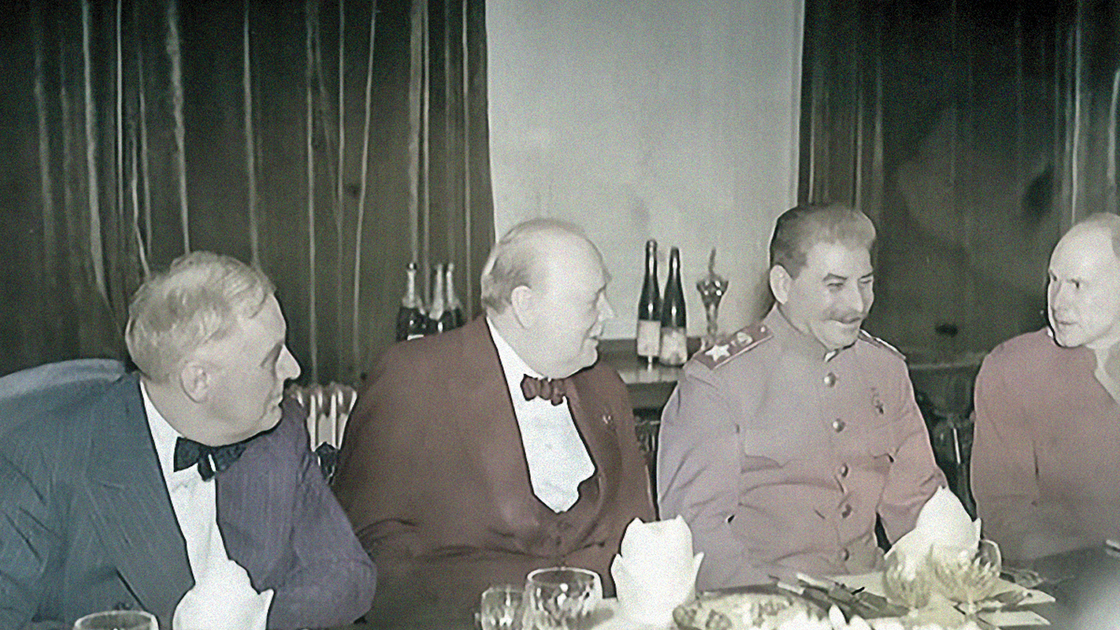
After he had his second bath of the day and dressed formally, Winston Churchill usually sat down for dinner around 8 p.m. Dinner was a lengthy, social event, often lasting past midnight. It was central to his daily schedule, used for diplomacy, intelligence gathering and lively discussion. During wartime, the fate of Western civilizations was being decided during his dinner sessions.
He almost always had guests, ranging from personal associates to political allies, generals and world leaders. Notable guests included King George VI, Queen Elizabeth II and Prince Philip. Other royal guests included the Shah of Persia and various European royals. He also frequently hosted British cabinet ministers, American ambassadors and high-ranking military officials such as admirals and generals. He held crucial wartime dinners with Allied leaders such as Franklin D. Roosevelt. And, despite the high-stakes nature of many gatherings, personal friends and family members were also frequent attendees, including his wife, Clementine, and their children. Churchill also socialized with writers, artists, businessmen and journalists, such as Charlie Chaplin and H. G. Wells. During the war, he befriended scientists in fields with which he was unfamiliar.
The key ingredient was conversation, with Churchill dominating the discussions. Guests were often captivated by his animated storytelling. Cutlery and salt and pepper shakers were integrated to illustrate battle strategies. Dinners were engaging and intimate, a stage for his brilliant conversational talents where he could glean diplomatic insights and argue for his policies. For Churchill, the dinner table was a crucial tool for diplomacy. It allowed him to advance his political agenda and stay up-to-date with British and international affairs. He persuaded allies, such as Franklin Roosevelt and Joseph Stalin, to support his strategic vision during the war.
What about us? What advancements are being made in our little family empires at the dinner table?
We must ensure this forum is a staple in our daily routine. Make family dinners a priority. “Some time ago, I realized that my family wasn’t eating together many nights,” Joel Hilliker wrote. “Because of various after-school and evening activities, our schedules conflicted, and people were just serving themselves at their own opportunity. I decided to change that. We studied the schedule and found at least a 20-minute window each night—it was at a different time each night, but it was there—where we could eat together.
“The positive effects were excellent and immediate. This may have been the single best thing we have ever done to build more cohesion and unity in our family” (Philadelphia Trumpet, March 2018). Make daily family dinner a priority.
Like Churchill, invite others over to enrich the experience. He had family and influential people over nearly every dinner. In God’s Church, we are kings and priests in training. We can have future kings and priests over for dinner!
Don’t allow a basic menu to be a reason to forsake assembling together. Remember, the key ingredient is conversation. If you are single, bring a family to you. If you lack space, make arrangements with those who don’t. You might offer to cook for them.
Make it quality time. Set aside all distractions and prepare for meaningful conversation. “Once my family got into the nightly dinner habit, I sought to improve our conversation at the table. I asked every member to come ready with some points of discussion: a joke, a question, a story from their day, a current event, and so on. This immediately changed what had been rather stilted mealtime chatting into a robust conversation. Before long I didn’t need to require prepared topics; everyone got used to thinking of things they could share over dinner” (ibid).
Be proactive and make dinner a productive, memorable, unifying occasion—a central part of your daily family schedule.