
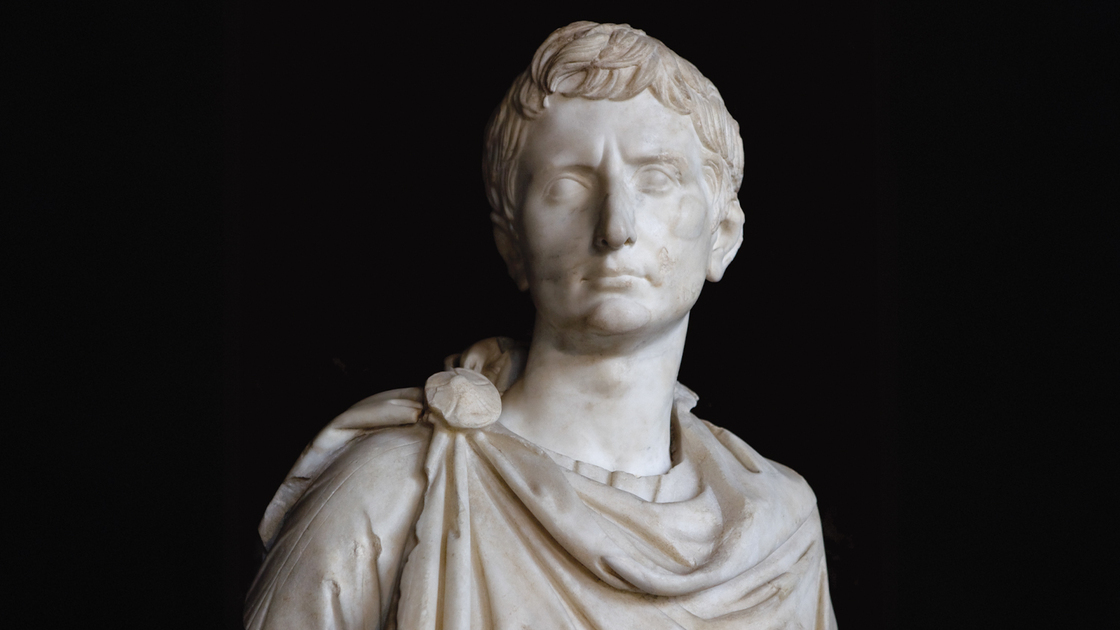
During the first century b.c., the Republic of Rome degenerated into corruption and civil war. Freeing the broken republic from its cycles of violence and forging it into a stable empire was necessary for the work of Jesus Christ and the establishment of His Church.
In 44 b.c., Julius Caesar declared himself dictator for life. Soon after, he was assassinated. His successor was his adopted son Augustus, victor in the civil war that followed the assassination.
“The main reason the Roman Republic did not completely disintegrate at that time was the administrative genius of Caesar Augustus,” wrote Joel Hilliker. “It was Augustus who created the fourth world-ruling empire foreseen by Daniel the prophet. Yet even the beastly Augustus knew that his new empire would not survive without strong families. Extravagance and adultery were widespread, so Augustus passed a series of morality laws that encouraged marriage and criminalized adultery. These laws helped stabilize Rome …” (Philadelphia Trumpet, October 2023).
Augustus was a master of diplomacy, a political genius, a deliberate and patient man. Unlike his father, he didn’t proclaim himself dictator for life. Instead, he portrayed himself as a humble leader of Rome, duly elected by the people.
He worked hard to legally reform the Roman system. He would get the Senate to grant him powers; powers that solidified his permanent authority. This took time.
During a bout of sickness, he saw threats to his rule. He renounced his position and made himself a permanent tribune of the people—a position that gave him the right to attend the Senate, propose legislation, and veto things he didn’t like. This moved him closer to permanent legal rule. He stripped the consulship of most of its power and responsibilities when he left it, turning it into a mere symbol. But this still appeased egos, as it provided prominent positions for ambitious men to fill.
During a grain shortage, riotous commoners called for Augustus to become dictator because he could solve the problem better than the Senate. But he knew publicly embracing absolute power would alienate the Senate, which had deposed Caesar. He refused the honor; he even told the people he would rather be stabbed in the throat than accept the office. This forced the people to relent while pacifying the Senate.
By 23 b.c. he had consolidated 90 percent of the legal authority he needed to be emperor.
He never indulged in his powers unless he needed to. He was very measured in his approach. His discipline helped forge a stable, profitable and relatively peaceful empire just in time for the first coming of Jesus Christ.