
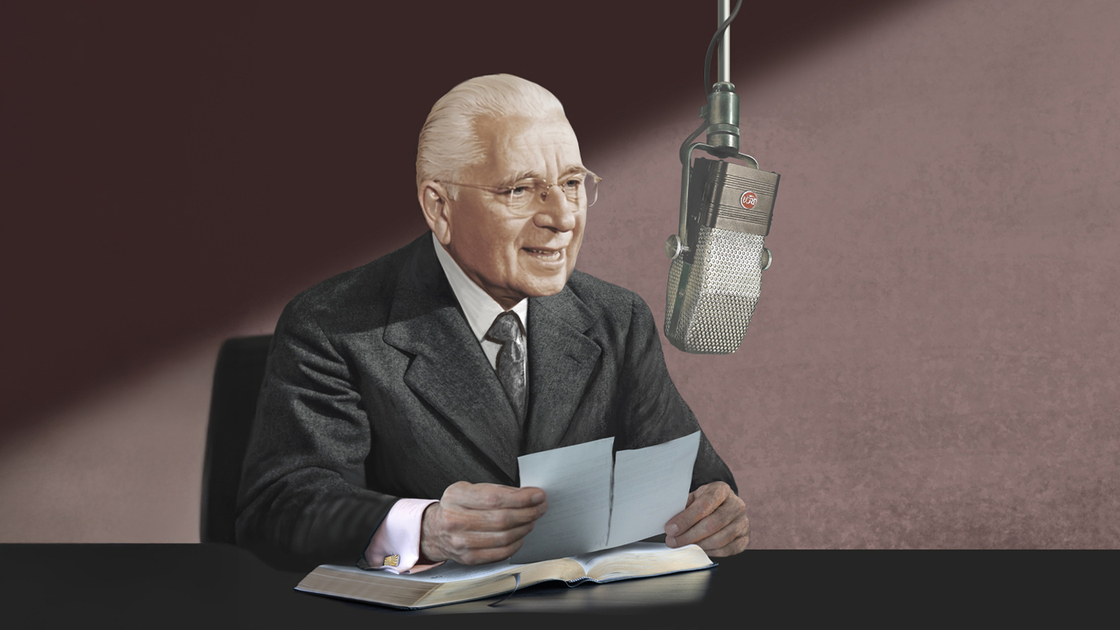
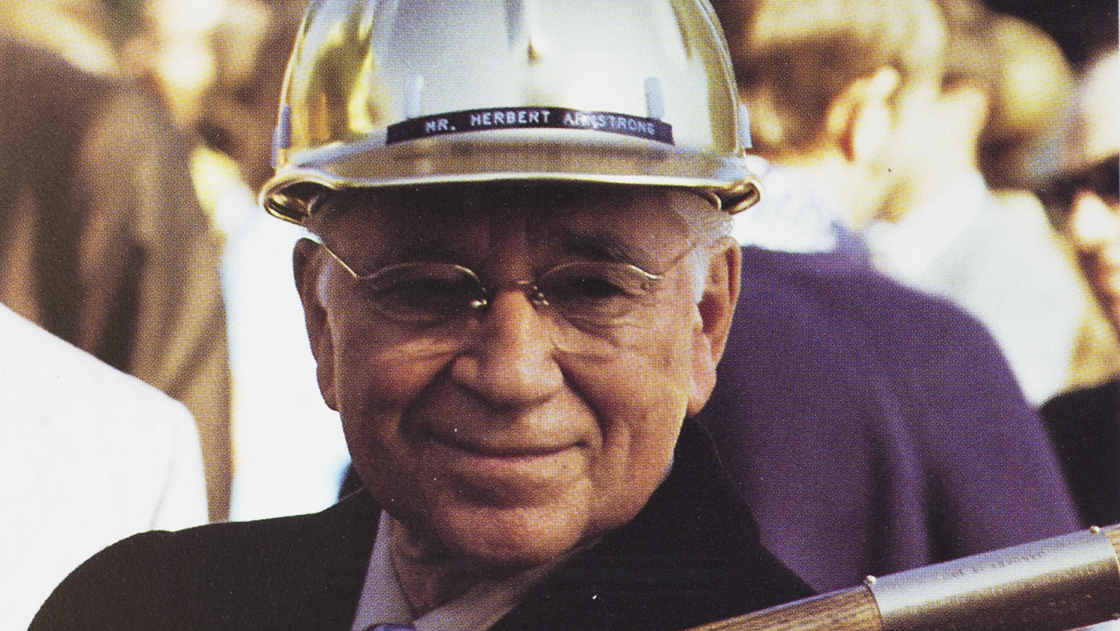
“Mr. Armstrong’s life is one of the highlights in the history of man,” Gerald Flurry writes in The New Throne of David. That is a bold statement! Human history has a lot of highlights. Why would Mr. Armstrong’s life be one?
Because of what it points to: Mr. Armstrong’s life was direct preparation by God for the greatest event in the history of the universe—the Second Coming of Jesus Christ!
God recorded several detailed prophecies about an individual role that He would use to prepare for that event. The fact that God recorded so much detail in advance shows how important this job really was.
Yet God never forced Mr. Armstrong to carry out these responsibilities. This man had his own will, which he had to voluntarily, repeatedly, wholeheartedly submit to his Maker. And for more than 50 years, that is what he did!
This was a remarkable partnership between a mortal man and the great God. It’s one that we should not only marvel at but also emulate.
Preparing for Christ’s Coming
Christ’s first coming was one of the epochal events in history. God prepared the way for that coming as well.
Mark 1:1 speaks of “The beginning of the gospel of Jesus Christ,” then immediately quotes the prophecy of Malachi 3:1: “Behold, I send my messenger before thy face, which shall prepare thy way before thee.” Then comes the prophecy of Isaiah 40:3: “The voice of one crying in the wilderness, Prepare ye the way of the Lord ….” God emphasized that He would send a messenger to prepare people and announce His Son’s coming.
For Christ’s first coming, John the Baptist fulfilled that prophecy (Mark 1:4). He preached repentance, the need for people to turn from their sins. He was a mighty messenger, readying people for Christ’s arrival (verses 7-8).
However, Malachi 3 and Isaiah 40 are both clearly end-time prophecies. One says the day of Christ’s coming will be like a blazing refiner’s fire. The other says every valley shall be exalted, every mountain and hill shall be made low, God’s glory shall be revealed, and all flesh shall see it together! It prophesies of a voice saying, “Behold your God!” and says that God “will come with strong hand, and his arm shall rule.” These foretell Christ’s coming in power and glory, which happens not at His first coming but at His return!
Yes, as Jesus Himself directly revealed in Matthew 17, John the Baptist prepared for the first coming, but there would also be a messenger, and a voice crying in the wilderness, before His Second Coming.
When the archangel Gabriel spoke with John the Baptist’s father, Zechariah, he said that John “shall be great in the sight of the Lord …. And many of the children of Israel shall he turn to the Lord their God” (Luke 1:15-16). John truly was a powerful servant of God.
“And he [John] shall go before him [Christ] in the spirit and power of Elias …” (verse 17). Elijah in Hebrew (Elias in Greek) means “my God is God.” The original Elijah represented the true God in a nation full of false gods. He was a prophet who called Israel to repentance, and John did the same. Elijah rebuked the corrupt leaders of his day, as John did. John came in the spirit of Elijah’s boldness and authority.
You could also say all these things about the messenger in the end time. Herbert W. Armstrong came in the spirit and power of Elijah. He called for repentance. He rebuked sin. He spoke with boldness and authority. This is what Christ expected in the herald who prepared for His coming.
A People Prepared
Gabriel’s prophecy continued: “… to turn the hearts of the fathers to the children, and the disobedient to the wisdom of the just; to make ready a people prepared for the Lord” (Luke 1:17).
Those first words recall the prophecy of Malachi 4:6, also to be fulfilled nearly 2,000 years after John—“before the coming of the great and dreadful day of the Lord” (verse 5). “John the Baptist came in the spirit of Elijah, but he never turned the hearts of the fathers to the children,” Gerald Flurry writes in Malachi’s Message. “Those people following John did not yet have God’s Holy Spirit. Without the Holy Spirit, this would have been spiritually impossible. It says ‘he’ (end-time John) would turn the hearts of the fathers to the children and prepare the way for Christ’s Second Coming.”
John made ready a people prepared for the Lord’s first coming. For about 400 years between the Prophet Malachi and John the Baptist, there had been no prophetic voice in Israel. The nation’s religion was sick. Then John came with fiery preaching and trumpeted, “The Kingdom of heaven is at hand”! It was a jolt. It shocked people out of their spiritual lethargy. It was crucial for them to be able to recognize the significance of Christ’s coming.
Yet all that was merely a type of the preparations God would make before Christ’s Second Coming. In this modern day, God truly needs “a people prepared for the Lord.” We are the generation that will announce His return: “Behold your God!” We will be working with the first generation of mortals in the Millennium, when Christ rules Earth. Those people will be refugees of the Great Tribulation and the Day of the Lord; they will have experienced the modern world, with all its technology and luxury as well as its cataclysmic destruction. God needs a people prepared for that massive job: to be spirit beings at the start of the Millennium!
Most of those who arise in the first resurrection will be from the Philadelphia and Laodicean Church eras, having lived in modern times. Among the saints through the ages will be the sealed saints from the sixth era, as well as the 144,000 repentant Laodiceans and the entire faithful Philadelphia remnant.
And a large majority of those God beings will be there because of the work of Herbert W. Armstrong. That end-time Elijah really did “make ready a people prepared for the Lord.”
To qualify in this Laodicean era, you also need the revelation God has given through Gerald Flurry. But as we will see, Mr. Armstrong restored all things—all foundational truth, including the gospel, the advance good news of the coming Kingdom of God. He truly prepared the way. Mr. Flurry learned all that truth from him. Mr. Armstrong was a spiritual father to Mr. Flurry. There is no Philadelphia remnant without a Philadelphia era.
Confidence in His Messenger
Consider that first prophecy Mark pointed to: “Behold, I will send my messenger, and he shall prepare the way before me …” (Malachi 3:1). The context shows this refers to the Second Coming: “But who will be able to endure it when he comes? Who will be able to stand and face him when he appears? For he will be like a blazing fire that refines metal, or like a strong soap that bleaches clothes” (verse 2; New Living Translation). This “messenger” has a message about Christ returning in power and glory.
Proclaiming these momentous prophecies is a crucial responsibility. God knew it would take considerable dedication and character to fulfill it. He stated these prophecies in detail and in confidence, and He needed confidence that the man He chose to do the job would carry it out.
“God makes a blanket statement here: ‘[H]e shall prepare the way before me.’ Period! No caveats or qualifications,” Mr. Flurry writes. “What an endorsement of this man! God made a covenant with Mr. Armstrong, and He knew that Mr. Armstrong would do the job. Did he ever! What a messenger!” (op cit).
What must a man do for God to have such confidence in him? How can we inspire that kind of certainty in God?
God recorded this prophecy about 2½ millenniums before Herbert Armstrong was born. How is that possible? Mr. Armstrong had free will. He could have refused God’s call or gone astray. Perhaps God considered other individuals to fulfill this role, and they just couldn’t or didn’t fulfill it. Mr. Armstrong did.
The life of the end-time Elijah illuminates a beautiful partnership between God and a man. God didn’t force him. Mr. Armstrong had to yield himself.
In the Good News of August 1979, Mr. Armstrong wrote, “In all this world’s history God has never started an important Work or special activity through a chosen human, and then, after that special accomplishment is well advanced, allowed His chosen human leader to be overthrown by Satan—or in any way to turn false!” He then spoke of Moses, Joshua, Paul and Peter, and also referred to himself. Those examples tell you a lot about God. Throughout human history, He has accomplished many critical jobs through fallible human beings and with astounding success.
Mr. Armstrong concluded, “God never yet has let one through whom He started a great project turn wrong—and He has never yet let such an appointed leader of His die until his job was finished!”
Quoting this in Who Is ‘That Prophet’?, Mr. Flurry writes, “How inspiring it is to think about that! God will carry on with His Work and will really do everything He can to help that leader. His success has been 100 percent throughout the ages.”
God gets most of the credit, but He must be very selective, choosing a man who will work with Him. Jude 1 speaks of all God’s saints being sanctified by the Father and preserved by Christ before we are called. Surely that vetting process is even more intensive for a momentous role like the end-time Elijah!
In Mystery of the Ages, Mr. Armstrong wrote this about Abraham, the man through whom He would start His chosen nation: “God was calling him because he had seen in this man the potentialities of obedience to God and of leadership.” Not only did God see such potential, He was deeply involved in that man’s life, helping and guiding him, shaping the father of physical and spiritual Israel.
Now consider Mr. Armstrong’s life and think on how many details and events God orchestrated to guide, shape and perfect that man. We have his 900-page Autobiography that gives us all the details! It shows how God shaped his formative years before He even called him, how He provided extensive experience in publishing and mass communications, blessed him by allowing him to build career success, then built his character by tearing down that career. God brought specific people into his life to plant seeds of the truth, then carefully measured his response. He brought many tests, including 28 years of poverty, pressures and even crushing trials in doing God’s Work, losing his firstborn son, and then his wife.
God’s hand was heavy on Mr. Armstrong, teaching him, correcting him, keeping him on track. And Mr. Armstrong subjected himself to that. He allowed God to shape and direct his life. This is a lesson, recorded in detail, that we can all learn from!
The Elijah Work
One of the main prophecies about the end-time Elijah is Malachi 4:5-6: “Behold, I will send you Elijah the prophet before the coming of the great and dreadful day of the Lord: And he shall turn the heart of the fathers to the children, and the heart of the children to their fathers, lest I come and smite the earth with a curse.”
The end-time focus of this passage is plain: It occurs right before Christ’s Second Coming. In fact, Mr. Flurry has explained how the entire book of Malachi unfolds during the Laodicean rebellion. This “I will send” and the “I will send my messenger” of Malachi 3:1 are a promise that God would send that message again during the Laodicean era.
“God is telling us in strong language that we must declare what Mr. Armstrong taught; he was God’s messenger. And we live in a time when the very prophecies he taught are now coming to pass in an amazing fashion,” Mr. Flurry writes. “There is somewhat of a gap, however, between the end-time Elijah and the Day of the Lord. It originally seemed that the Day of the Lord would come immediately after Elijah came. Some say that Mr. Armstrong’s death proves he was not the Elijah. But look at it spiritually: Elijah is still here! Because the group that held fast is bringing Elijah’s message back! That work will continue right into the Great Tribulation and the Day of the Lord” (The God Family Vision).
Malachi 4:6 is the most profound description of that Elijah work. In continuing the Elijah work (article, page 16), the pcg comes back to this continually. This is about physical families and relationships between physical fathers and their children—and about the spiritual Family and all of us relating to our spiritual Father. It describes the God Family vision that God revealed through Mr. Armstrong—and the terrible consequences of losing that vision.
God must have a people prepared to teach this family vision and way of life to the world! This is at the heart of what Mr. Armstrong taught and of the Elijah work we carry on today.
‘Restore All Things’
During His first coming, Jesus Christ pointed His disciples to this very prophecy. He brought three of them up a high mountain and was transfigured before them in a vision of His Second Coming. This got them thinking about Christ coming in glory, and about Malachi’s prophecy. As they descended the mountain, the disciples asked, “Why then say the scribes that [Elijah] must first come?” (Matthew 17:10). Explain the meaning of Malachi’s prophecy, they said. Tell us about this man who would prepare the way before the Day of the Lord and the coming of the Savior.
Christ confirmed that a man like Elijah would definitely come to prepare the way before Christ’s glorious return, then added this prophecy: This man would “restore all things” (verse 11).
In a sermon on Dec. 17, 1983, Mr. Armstrong described how John the Baptist fulfilled much of this as a forerunner of an end-time fulfillment. He then said, “Now John the Baptist didn’t restore anything. They already knew about the law, and he called them to repentance; but he didn’t have to give them sermons about what all the law is. They knew that. He just called them to repent and turn to another way, and baptized them.”
As Jesus Christ specifically said in Matthew 17, this “restoration” is unique to this end-time Elijah. “This is a sign to the world that Jesus Christ’s return is imminent. When ‘all things’ are restored, that is the beginning of the end!” Mr. Flurry writes in The Epistles of Peter—A Living Hope. This is an extraordinary prophecy of what God planned to do with that end-time Elijah!
When Christ returns, He will “restore all things”—including His truth, law and government—to all peoples and nations (Acts 3:19-21). Mr. Armstrong restored all things to the Church—a crucial part of ensuring there would be a people prepared for the Lord. Over the eras between Jesus Christ’s resurrection and the modern age, the truth was largely lost, particularly during the fifth era of the Church, which died spiritually (Revelation 3:1). God planned to restore all that truth through this end-time Elijah!
It’s true that God is the one who restored that truth, but that is not how Christ expressed it: “Elias truly shall first come, and restore all things.” Here, as in other prophecies about the Elijah, God highlights the role Mr. Armstrong played in restoring the truth to the Church.
How did God actually do this? He didn’t just hand him all the foundational truth: He made Mr. Armstrong work—for decades! Again, it was a partnership. Mr. Armstrong had to submit to God and work extremely hard. He began with six months of intensive study, and that study continued throughout his life. In his 90s, just before he died, he was still learning!
Mr. Armstrong wrote Mystery of the Ages, his great summation of the truths God had restored through him, when he was 92. And that project began because he had gained a deeper understanding of how God cut mankind off from the tree of life. That book includes many details you don’t find anywhere else in his many books, articles, letters and broadcasts. Study Mystery of the Ages carefully, and you will see clearly that God inspired that book! A blind 92-year-old man who couldn’t even look up scriptures anymore didn’t do that. It truly is a masterful work because it was inspired by God and put to paper by a feeble old man who pushed himself to yield to God and to serve God!
Gospel in All the World
Another end-time prophecy further shows the momentous job God had for Mr. Armstrong. While describing conditions signaling the end of the world, Christ said, “And this gospel of the kingdom shall be preached in all the world for a witness unto all nations; and then shall the end come” (Matthew 24:14). This stunning prophecy shows that the gospel was not broadly preached for 1,900 years after Christ spoke these words! All the “Christian” evangelizing and proselytizing for all those centuries was not preaching “the gospel of the kingdom” that Christ preached. This prophecy wasn’t fulfilled until God revealed the full truth about the true gospel so it could be preached in this end time—by Mr. Armstrong.
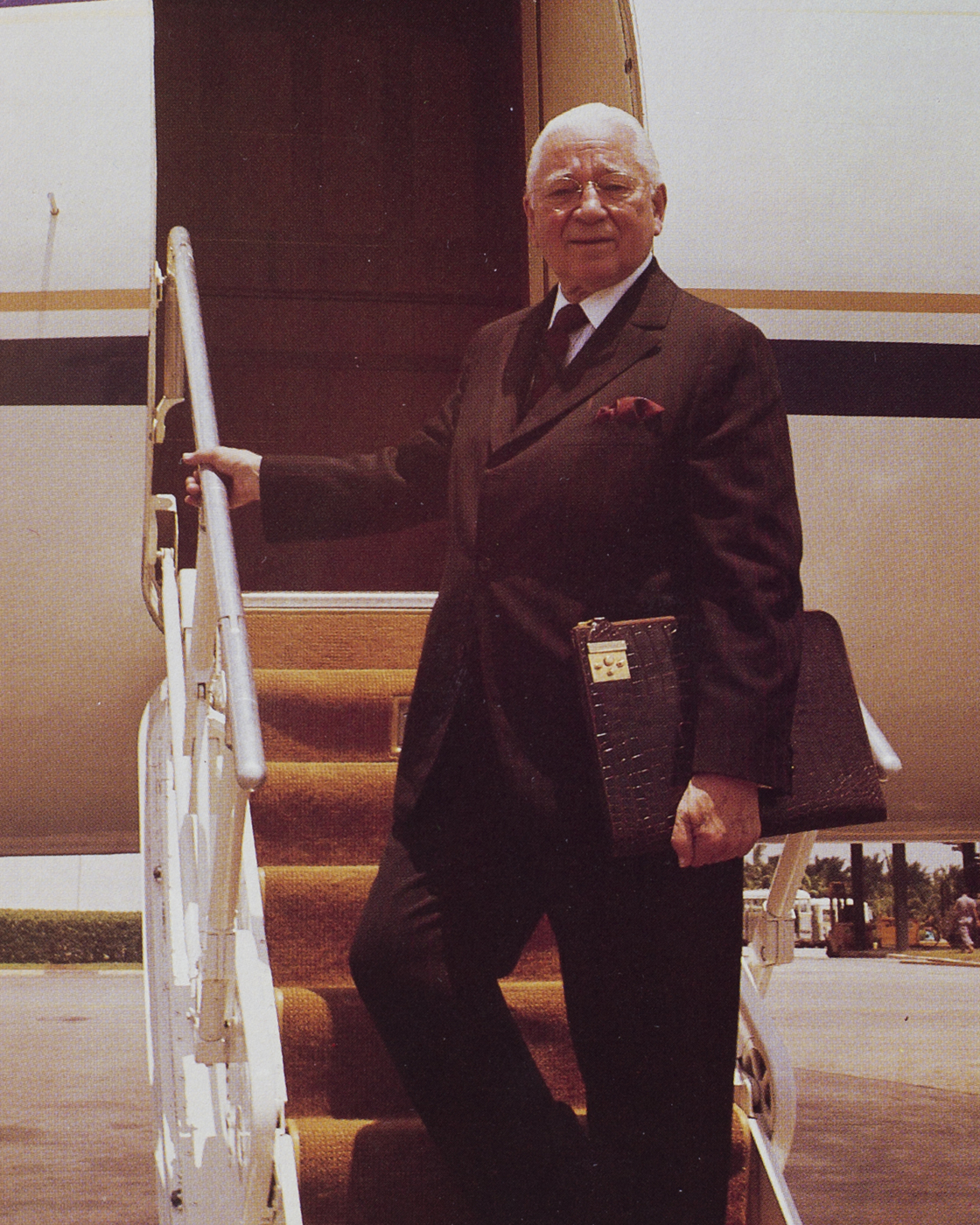
Though he was born in 1892, he, unlike many young people his age, was exposed to mass media his whole life. When he was 8 years old, he got a job selling the Saturday Evening Post magazine each week. As a youth, he spent hours in the city library reading biographies and books on philosophy and business administration. At age 18, a self-analysis showed he was suited for a profession in journalism or advertising. He subscribed to two leading trade journals, Printers Ink and Advertising and Selling. He got a job with the Des Moines Daily Capital writing want-ads. He later moved into making display ads and was tasked with designing and laying out the Merchants Trade Journal. He learned about magazine production and printing presses. He became the “idea man” for this paper and undertook a public opinion poll—now a regular feature in mass media—for the town of Richmond, Kentucky. His report was so sensational, it became his first published magazine article. And on it goes.
It was as early as 1933 when God opened the door for Mr. Armstrong to give his first radio broadcast, speaking to a few hundred people in the Eugene, Oregon, area. A few months later, he began the Plain Truth magazine with 250 mimeographed copies. He forayed into television broadcasting as early as 1955. Mr. Armstrong truly was a pioneer in mass media, publishing and broadcasting.
Then God opened giant doors for him to reach all nations with the true gospel. Through the Ambassador International Cultural Foundation, Mr. Armstrong supported cultural, charitable and humanitarian projects in the Bahamas, Belgium, China, Costa Rica, Egypt, England, Hong Kong, India, Iran, Iraq, Israel, Jamaica, Japan, Jordan, Kenya, Kuwait, Lebanon, Monaco, Nepal, the Netherlands, New Guinea, the Philippines, South Africa, Spain, Sri Lanka, Switzerland, Tanzania and Thailand.
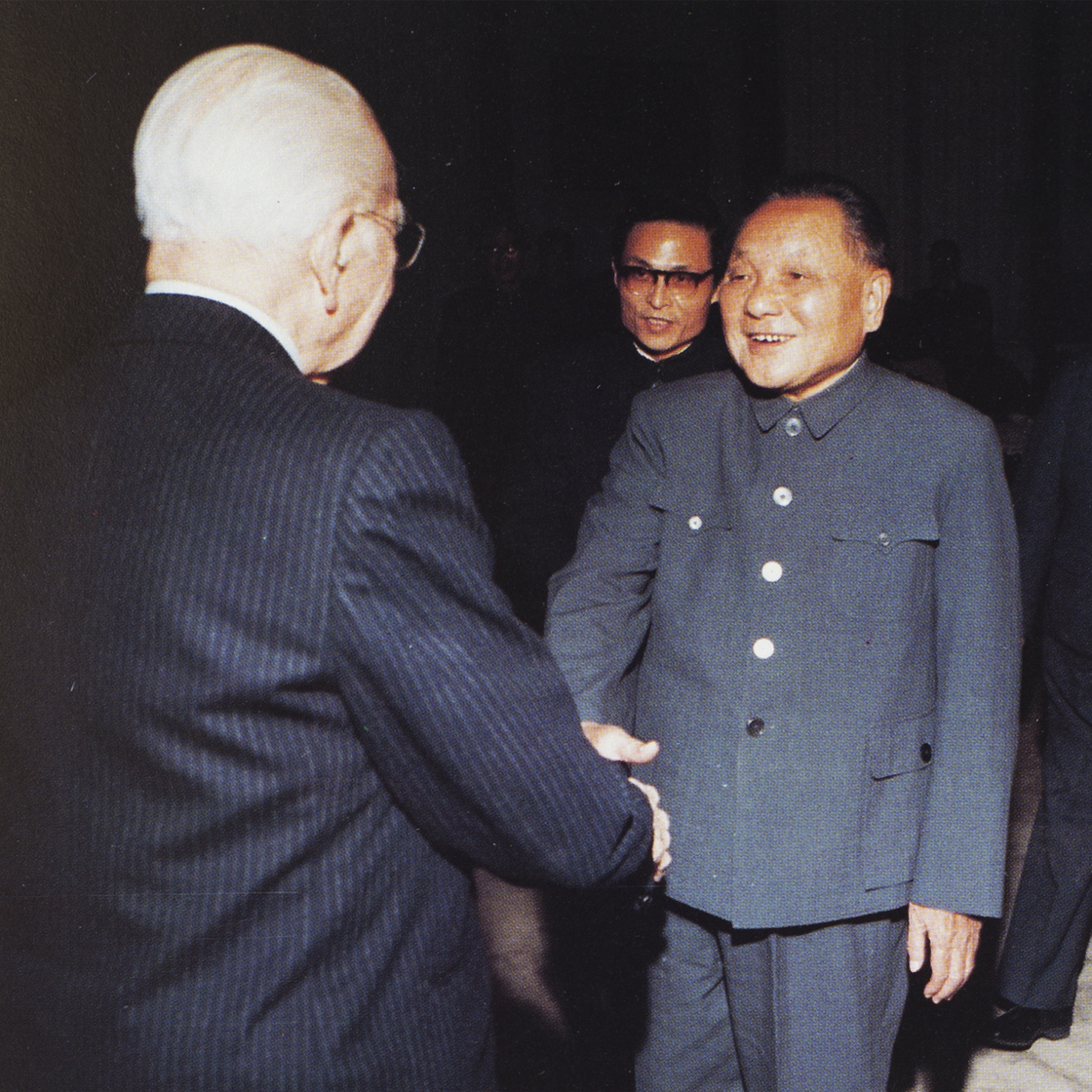

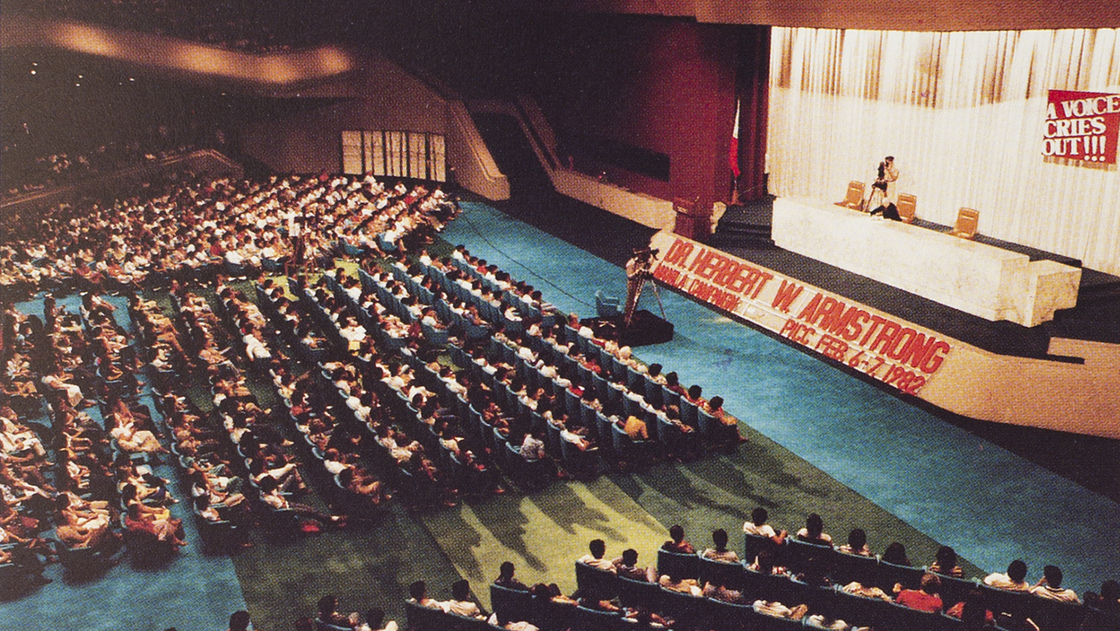
Mr. Armstrong personally met over 500 heads of state: prime ministers, presidents, kings and queens, emperors, princes and princesses, as well as legislators, ambassadors, cabinet ministers, first ladies, governors, mayors, generals, judges, chief executives, college presidents, musicians, artists, athletes, Nobel Prize winners and other leaders of government, industry and culture, as well as many everyday people and many who were in poverty. He obtained personal audiences with those world leaders in their government offices and in their homes, some of them repeatedly, sometimes covered by national news media.
These leaders referred to Mr. Armstrong as an “ambassador without portfolio” and “an unofficial ambassador for world peace.” Six months before his death, at the 40th Anniversary Commemorative Convention of the 1945 signing of the United Nations Charter, Mr. Armstrong was honored with a standing ovation from the ambassadors of 101 countries as the individual who had met with more world leaders than any other man alive.
This history and these prophecies show how important it was to God to preach the true gospel “in all the world for a witness unto all nations.”
Zerubbabel the Builder
Another prophetic role Mr. Armstrong fulfilled was that of an end-time Zerubbabel. The original Zerubbabel was a descendant of King David, the grandson of King Jehoiachin, who had been exiled to Babylon. He led the Jews’ return to Jerusalem, rebuilt the altar, restored sacrifices, and laid the foundation of the second temple. This impressive man persevered in this work against serious opposition.
“[P]rophetically, this Zerubbabel was the type of one to come in the last days of this world,” Mr. Armstrong wrote, “whom Christ would use in building the temple to which the glorified all-powerful Christ shall come at His second appearing” (Good News, Nov. 20, 1978).
“… This is the word of the Lord unto Zerubbabel, saying, Not by might, nor by power, but by my spirit, saith the Lord of hosts” (Zechariah 4:6). That was how Mr. Armstrong built. He was an expert at building with the Spirit of God. Look at what he accomplished, even into his 90s. That leadership, revelation and building was not done by physical might or power!
“The hands of Zerubbabel have laid the foundation of this house; his hands shall also finish it …” (verse 9). In Zechariah—The Sign of Christ’s Imminent Return, Mr. Flurry explains how “house” here refers to the Church’s sixth era. “Mr. Armstrong not only laid the foundation, as we often say today—he built the whole house,” he writes. “When he died, the Philadelphia era was completed.”
What an accomplishment! Truly, Mr. Armstrong’s life is one of the highlights in the history of man! Remember this wonderful man and what he accomplished with submission to God and with the power of God.
Then act on it.
Yield to the Master Potter
Mr. Armstrong responded to God’s direction in his life. It wasn’t easy; he faced repeated trials and tests. But through that one human life, God was certainly able to fulfill the prophesied role of an Elijah, a Levi, a Hilkiah and a Zerubbabel. God obviously gives Mr. Armstrong tremendous honor. But we must not forget the challenges this man had to endure.
Mr. Armstrong wrote this about his initial repentance: “… I told God that I was now ready to give my self and my life over to Him. It was worthless, now, to me. If He could use it, I told Him He could have it! I didn’t think, then, it was usable—even in God’s hands!
“But let me say to the reader, if God could take that completely defeated, worthless, self-confessed failure to which I had been reduced, and use that life to develop and build what He has done, He can take your life, too, and use it in a manner you simply cannot now dream—if you will turn it over to Him without reservation and leave it in His hands!” (Autobiography of Herbert W. Armstrong).
That is a towering lesson. Will we subject ourselves to God’s perfecting process in our lives, even when that means heavy trials, to attain the spiritual heights God wants for us?
God knows what He is doing. He knows what it takes to help us succeed, but we must submit ourselves to Him as Mr. Armstrong did. He is the almighty Architect and Artist, and creating His holy, righteous character in human beings is the pinnacle of His creative accomplishment! He is the Author and Finisher of the faith of Abraham, Moses, David, Elijah, Jeremiah, Paul, John and so many more. This requires enormous power and effort on His part, and it requires sacrifice, trial and struggle on our part.
Think of Moses, who would lead Israel from slavery, record the law, build the tabernacle, write the first five books of the Bible, and lead the nation to the Promised Land. That was a monumental job, but God was with him from birth. He saved Moses from death, made him a prince of Egypt for 40 years, drove him into the wilderness to be a shepherd for 40 years—all before calling him. By the time God gave him that responsibility, Moses had become the meekest man on Earth! (Numbers 12:3).
When someone is willing to become pliable clay in the hands of the Master Potter, God can shape that person into a spiritual giant. He can create a prophet, an apostle, a king, a king-priest.
The prophecies we have studied show that God knew in detail what He wanted to accomplish with a man in the end time in preparation for His Son to come—and He did it. God was able to fulfill exactly what He intended to do, with confidence. That is because Mr. Armstrong submitted himself to God so completely and beautifully. What a beautiful partnership God had with His end-time Elijah!
What does God want to accomplish in your life? You can be sure it is awesome. Don’t fight God. Don’t be willful. Don’t get distracted. When you fail God, get back up and fight to become submissive and obedient again. Seek His will and submit to it the way Mr. Armstrong did. He can take your life, too, and use it in a manner you simply cannot now dream.