
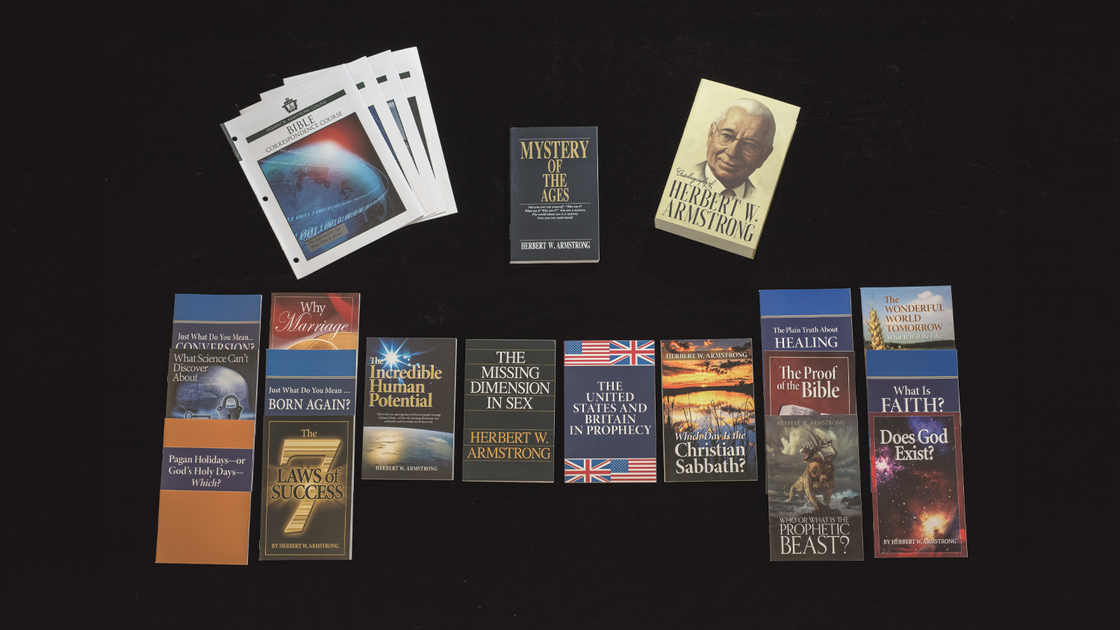
In the homes of many Worldwide Church of God members, the cancellation of Mystery of the Ages in early 1989 was a traumatic event. I remember well the outrage in my home upon receipt of wcg Pastor General Joseph Tkach’s “Personal.” Though Mystery of the Ages contained the “fundamental truths of God’s Word,” Mr. Tkach claimed, “we must realize that some of the peripheral or incidental points it contains give occasion to critics to fault the whole book. Some of these areas also tend to inadvertently mislead readers on a few points” (Worldwide News, Feb. 20, 1989).
This moment ultimately led to a six-year court battle over this very decision and the subsequent attempt by Herbert W. Armstrong’s successors to keep his final book out of readers’ hands. Yet in many ways, the Church was already in chaos, and in less than a year, the Philadelphia Church of God would form.
In a meeting with Joe Tkach Jr. on Dec. 7, 1989, Gerald Flurry and John Amos were fired for Mr. Flurry’s manuscript Malachi’s Message to God’s Church Today. In Mr. Flurry’s account of that meeting, one moment stands out to me: Mr. Tkach Jr.’s claim that Mystery of the Ages had been discontinued not because of cost and the availability of its message in other literature as they had claimed in a letter to the ministry, but because it was “riddled with error.” He would later confirm that view during the court case.
This was quite a change from what his father had said in 1986: that it was Mr. Armstrong’s “most powerful and effective book,” and that “Mr. Armstrong did not underestimate the importance of this last work.”
That is certainly true. Mr. Armstrong told his readers he wanted this book to reach “the largest audience possible.” Yet just three years after his death, it was discontinued when his successors determined to keep it out of circulation entirely.
In 1997, Pastor General Gerald Flurry determined that the pcg must publish Mystery of the Ages. The response from the wcg’s in-house lawyer, Ralph Helge, was immediate: “We would appreciate you advising us by what authority you are, without the permission of the Church, copying and publishing [Mystery of the Ages]?” (Jan. 21, 1997). On February 10, the wcg filed suit.
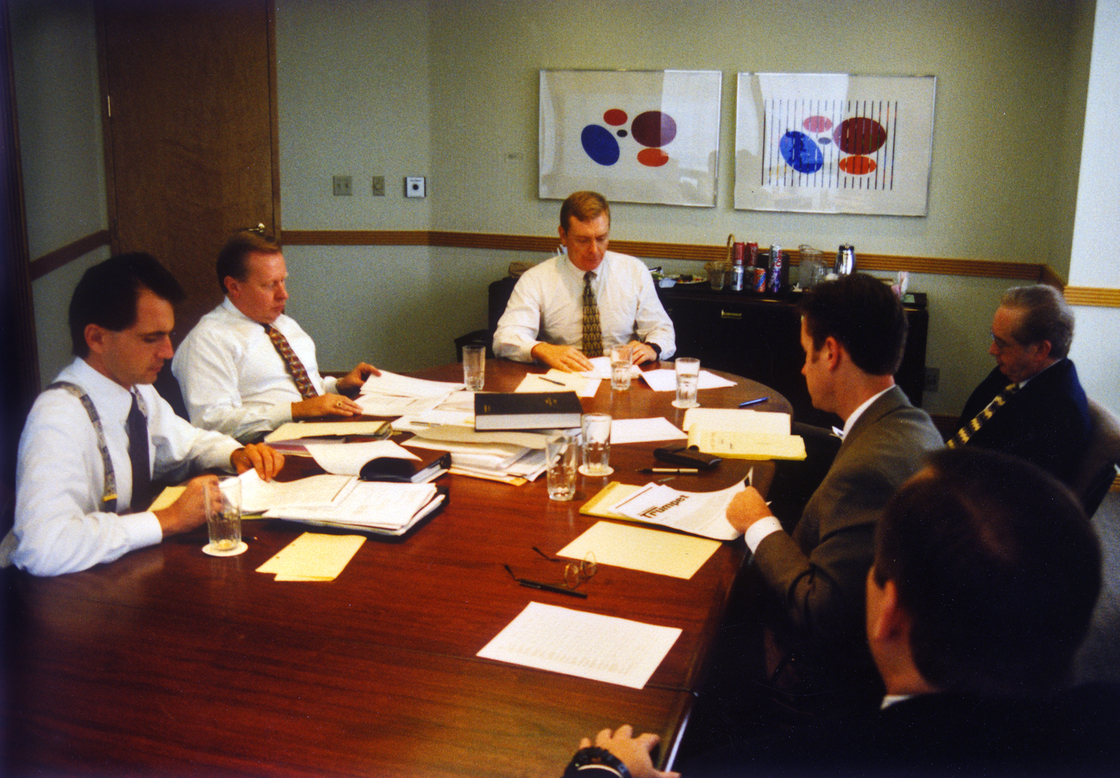
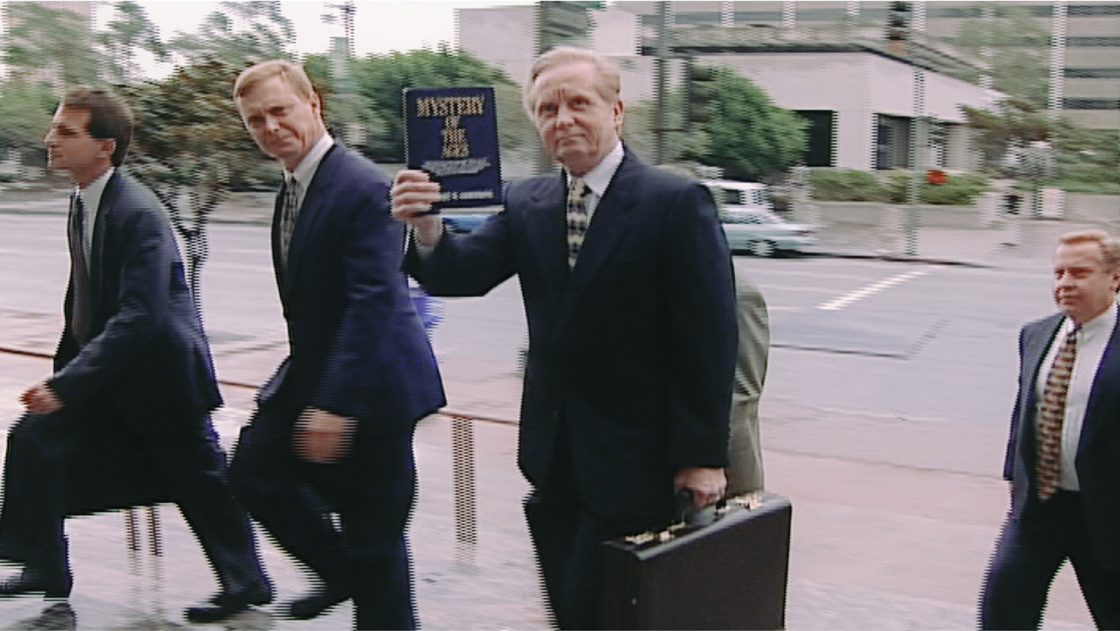
Despite the wcg’s claim that they had suffered monetary damage and that they had intended to distribute Mystery of the Ages again, Joe Tkach Jr. eventually exposed his real motives in his book, Transformed by Truth: “We feel it is our Christian duty to keep this book out of print … because we believe Mr. Armstrong’s doctrinal errors are better left out of circulation” (emphasis added). This put wcg’s legal teams in a real bind. wcg leaders had claimed they would have considered licensing the works to the pcg, not that they would actively work to ensure Mr. Armstrong’s writings never saw daylight again. Mr. Tkach Jr., they claimed, was sharing his personal views, not the views of the organization.
These sorts of hypocritical statements and actions continued throughout the litigation, perhaps reaching their height with the infamous claims of publishing an annotated version of Mystery of the Ages. In an e-publishing scheme, wcg posted 19 of Mr. Armstrong’s works—the very 19 listed in the litigation. “Due to the ‘additional benefit’ of the wcg’s ‘good faith’ e-publishing offer,” Stephen Flurry wrote, “we could now direct prospective members, who might know nothing about Herbert W. Armstrong, to download a copy of Mystery of the Ages (at a substantial cost) with a 1,500-word preface denouncing the author as an uneducated hack who taught heretical doctrines and wielded dictatorial control over the Worldwide Church of God. Of course, we failed to see how this would truly benefit the spiritual needs of our Church” (May 2003, Philadelphia Trumpet).
Meanwhile, the lawsuit was revealing where everyone stood. On one side, some of God’s own people were literally fighting against Him, while on the other side, those who remained loyal to the truth restored through the end-time Elijah fought for the right to deliver God’s message. On the sidelines, another group was revealed, consisting of those who had left the wcg but lacked the courage to come forward in support of the cause—they just watched. Meanwhile, Mr. Flurry showed pcg members that Habakkuk had already revealed the outcome of the court case.
There isn’t space here to detail all the twists and turns, but ultimately, while awaiting a damages trial after our appeal was rejected by the Supreme Court, Jesus Christ personally intervened and gave us what no court could have: The wcg agreed to sell Mystery of the Ages and 18 additional works to the pcg on Jan. 16, 2003—the 17-year anniversary of Mr. Armstrong’s death. The total cost to the pcg after insurance contributions was $2 million.
The best the courts could have done is allow us to print and distribute the book under a licensing agreement, but God gave the pcg ownership of Mystery of the Ages and Mr. Armstrong’s other works. And so, Mystery of the Ages, the most important work of Herbert W. Armstrong’s life, along with the other 18 works remain freely available to anyone who requests them, because Mr. Flurry, following Jesus Christ’s direction and supported by the Philadelphian remnant, was willing to fight for God’s truth.
“We have just won the greatest victory ever in the Philadelphia Church of God!” Mr. Flurry wrote in the May 2003 Philadelphia Trumpet. “It will probably be our most thrilling victory in this entire end-time work.”
You can read the gripping details about the court case in Stephen Flurry’s book, Raising the Ruins, which we will be happy to send for free upon request. Alternatively, you can read the e-version, which contains no preface.