
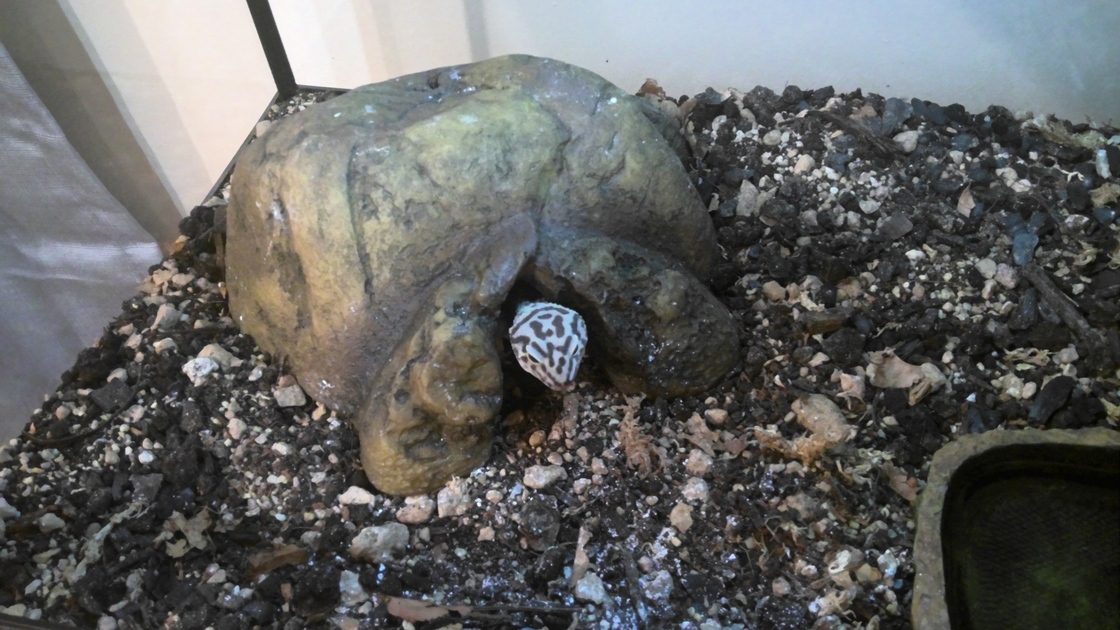

She’s moody. She’s expensive. She’s cold-blooded. And she’s mine.
At least, she became mine last December when I took her home from the pet store. “She” is Roxanne, my new pet leopard gecko. About seven inches long and a voracious predator of crickets and caterpillars, she now resides in a 20-gallon terrarium in my living room.
Though Roxanne was captive, bred and spent much of her life thus far in a display window at PetSmart, leopard geckos are originally from Iran and Afghanistan (fitting considering I write about the Middle East for a living) and are perfectly adapted for life in the desert. Unlike other types of geckos, leopard geckos have functioning eyelids to protect against sandstorms. Their plump tails hold fat reserves to live from in times of famine.
Pet Projects
I kept many different types of animals with my family when I was younger. My favorites were my dog and aquarium my parents gifted me as a teenager. Having pets was a wonderful way for me to learn responsibility, whether it was keeping the dog exercised or changing the fishes’ water. Keeping an animal forces one to stay on top of their needs. It’s non-negotiable that they need to be fed or that their enclosures need to be cleaned up.
Now that I’ve been living on my own for a bit after graduating Herbert W. Armstrong College, I’ve noticed I’ve lost some of that “on-top-of-it-ness” that taking care of animals disciplined me in. I bought the gecko to encourage me to get some of it back. It’s not only because I want to snap out of a procrastinating mindset regarding some household chores or longer-term projects. One day, I hope to have a family. A spouse and children are going to have necessities that need to be filled regardless how tired I feel after work, regardless how much I want some “me-time,” regardless how much I may think there are “more important” things to worry about. They will have regular needs which will be non-negotiable for me to satisfy.
Paul wrote in 1 Timothy 5:8 that “anyone who does not provide for his own people, especially for his family, has disowned the faith and is worse than an unbeliever” (1 Timothy 5:8; Complete Jewish Bible). Yet human nature is naturally selfish (e.g. 2 Timothy 3:1-4). When one is single, especially when living on his or her own, it can be easy to slack off on responsibilities considered less important, reasoning that “since I’m the only one living here, I don’t have to worry about this or that as much.” Taking care of a pet’s needs can, even if only in a small way, help correct that mindset.
This doesn’t mean a pet is for everybody. Pets can be expensive. Even if you can afford an animal, there may be more pressing expenses to prioritize more. Pets can also disrupt travel schedules. If finding someone to take care of your pet makes it that much harder to make Feast of Tabernacles arrangements or even stops you from attending strongly encouraged events like a singles weekend, a pet may not be right for you.
But for those who can afford the venture, having a pet could be a wonderful character-building experience. Proverbs 12:10 reads: “A righteous man has kind regard for the life of his animal …” (Amplified Bible). In other words, being responsible for the wellbeing of an animal demonstrates what kind of outgoing concern we have for a being other than ourselves. As Mr. Armstrong so often said, this is the foundation of holy, righteous character.
An example: in preparing for getting a gecko, I learned that leopard geckos eat only live insects (which you could get at most pet stores) and juveniles need them daily. For most of the first week, Roxanne refused to eat. I was starting to panic as she wouldn’t touch most of what I put in front of her. One day, as I was holding a mealworm in tweezers in front of her, the mealworm squirmed out of my grip and hit her on the head. It looks like Roxanne thought I had flung the worm at her head, and for a while after that she ran away when she saw me. I began thinking: Great. She already doesn’t want to eat, and now she thinks I’m a predator and is afraid of me. I just spent $75 buying her and now she’s going to die of starvation.
Giving her some time, she has since warmed up to me and is eating normally. She even is letting me teach her how to be handled.
If I ever have children, I am confident I will face far scarier trials than my little one refusing to eat a mealworm. I need to learn how to keep a level head when such events arise and to be resourceful when circumstances unexpectedly turn for the worse.
(It is important to note that some people can go the opposite extreme and treat their animals as if they were people. Animals are not people. You don’t need to spend hundreds of dollars on clothing for your dog. You don’t need to get overly creative preparing people-food for your cat.)
Even keeping in mind that a pet will cost money, it doesn’t have to break the bank. Altogether, my leopard gecko plus the terrarium, heating system and other fixtures cost only a few hundred dollars altogether. And pets can be even cheaper than that. There are plenty of animals that don’t nearly have the financial cost, space necessities or socializing requirements a dog or cat have.
Below are a handful of options that at my local chain pet store cost less than 50 dollars for the animal itself. If I could obtain these animals living in rural Ontario, it’s a safe estimate that most people at least in North America could easily and affordably purchase animals like these. (Cost for enclosures and equipment would obviously vary, especially depending on if you go for used versus new):
Betta
Pets don’t get much more affordable or easy to care for than the betta fish. Also known as the Siamese fighting fish, the males have long and beautifully colored fins but are also territorial and need to be kept alone. Unlike most fish, their modified swim bladder allows them to breathe air. This means they can be conveniently kept in an environment with low-oxygenated water like a fishbowl. Bettas have strong personalities and can interact with you from behind the glass. A male betta at my local pet shop can cost about 30 dollars. A female betta, while smaller and less beautiful, can cost about 10 dollars.
Hamster
Rodents like hamsters can make ideal pets for people who want a mammal but don’t have much room. Hamster cages do not take up much space and hamsters can be trained to be handled. Hamsters are also nocturnal, meaning they start to be active right when most people come home from work. My local shop sells hamsters for about 20 dollars. Other cheap, commonly available rodents that may need extra levels of care include rats and gerbils.
Parakeet
Also known as the budgie, the parakeet is the world’s third most popular pet after dogs and cats. Unlike the other animals on this list, they are social creatures and would require one-on-one social interaction for at least some part of the day. But as far as parrots go, they are small and extremely inexpensive, costing at my shop at about 45 dollars. They are also happy staying perched on your shoulder as you go about your day-to-day business. Like many parrots, parakeets can be trained to speak human words and even imitate household sounds like closing doors.
Anole
Reptiles don’t get much cheaper than an anole. These lizards can change color like a chameleon, climb walls with their sticky feet like geckos, and the males have a bright red throat pouch called a dewlap that they display for communication. Anoles can be trained to eat out of your hand and even be handled if you’re careful. Being a reptile, they would have care requirements some other pets don’t have, like lighting and heat. My local shop sells them starting at about 30 dollars, depending on the species.
Benefits and Rewards
This small list is by far not exhaustive of all the common, inexpensive pets you could come across. With these or any pet you may want to have, please do your research for all of the animal’s husbandry needs before you purchase the actual animal.
I focused this article on the benefits to keeping animals in preparing to have a family. But there are way more potential benefits to petkeeping. Studies indicate keeping pets, especially interactive ones, could help lower stress levels. They add personality to a room and can make great conversation starters. They can help educate you on different aspects of God’s creation in a personal, hands-on way.
Taking care of an animal can mean much hard work. But it can also be extremely rewarding. I haven’t had my leopard gecko for long and am already feeling positive changes in my day-to-day routine. Having an animal isn’t for everybody. But for those that have the means to start, it can be a wonderful stepping stone to running a household with other, future little mouths to feed.