Life can be unpredictable.
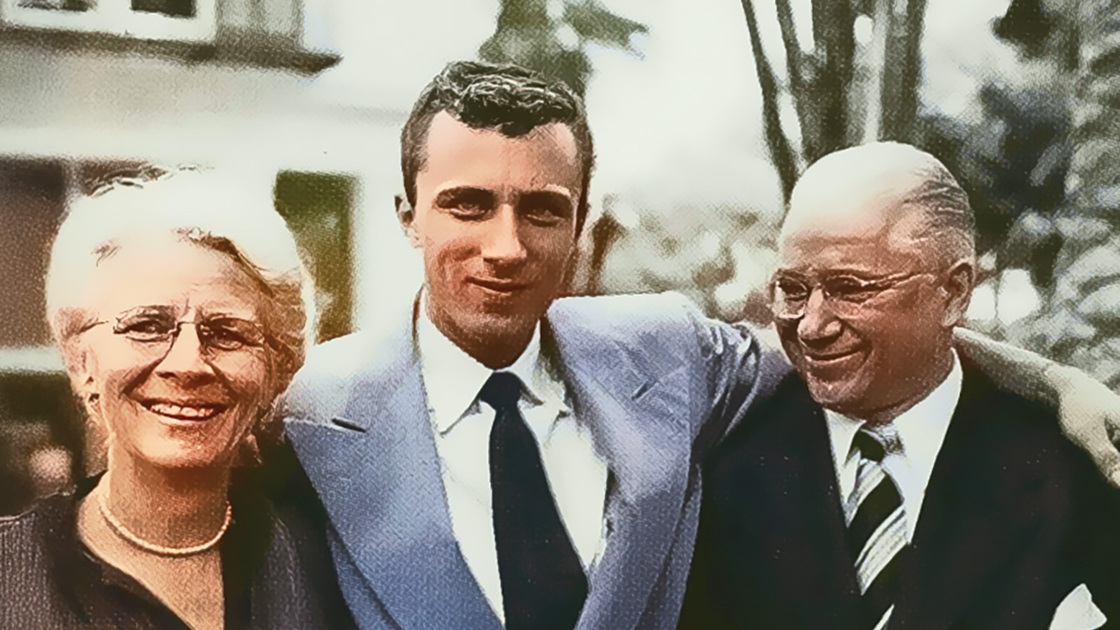
From 1957 to 1958, Richard Armstrong experienced a whirlwind of change. He married at age 28 and became a father at 29. Then, shortly before he turned 30, he was in a serious car accident and found himself in a hospital bed that threatened to become his deathbed.
Richard had a lot to lament, but his deathbed perspective set us a wonderful example. “In spite of the pain and the terrible condition, he kept in good spirits,” Herbert W. Armstrong wrote in his autobiography. “Once, in prayer, he began thanking God for the many, many blessings that had been lavished on him. The nurse in attendance said that this continued a long time—he had so very many things to be thankful for.”
Richard Armstrong lived those final, painful days of his physical life according to a specific scriptural directive: “In every thing give thanks: for this is the will of God in Christ Jesus concerning you” (1 Thessalonians 5:18). The New Living Translation says, “Be thankful in all circumstances ….” This means it should be routine for us to express thanks to God for His miracles and blessings—even in severe trial! If we go to God abounding in praise and thanksgiving, telling Him how much we love Him and appreciate everything He does for us as a benevolent, giving Father, He will be moved to continue blessing us.
Think on God’s perspective. Would He want to give us something, or bless us, if we do not show appreciation, if we feel entitled, or if we take Him for granted?
Sadly, ingratitude is our natural human tendency. It’s an easily identifiable problem in young children. Unless corrected, children will become demanding, with an inherent sense of entitlement. Yet when corrected, it’s remarkable how quickly children will take on a spirit of gratitude.
We all tend to be unthankful. Mr. Armstrong called ingratitude one of the most common sins.
“God commands gratitude because displaying godly gratitude develops humility and contrition, two qualities of character we must possess if God is to fulfill His will and come work in our lives!” (theTrumpet.com/7690). If we lack this quality, God cannot work with us!
“Let your roots grow down into him, and let your lives be built on him. Then your faith will grow strong in the truth you were taught, and you will overflow with thankfulness” (Colossians 2:7; nlt). Our closeness to God and the degree to which He is working with us will be evident in our gratitude. We ought to examine ourselves on this point.
Another worthy example is King David. He lived a life of gratitude. That is one reason God could accomplish so much through him. “David continually praised and thanked God!” Gerald Flurry writes. “He said, We must always be praising God and thanking God for everything He gives us. That reflects very spiritual thinking. The fact that David praised and thanked God so much shows strongly that he was a man after God’s own heart (Acts 13:22)” (The New Throne of David).
When faced with an undesirable situation, instead of complaining or getting angry or upset about something or someone, deliberately set your mind on gratitude. There is never a time not to give thanks to God! We need to give thanks in all circumstances, in all things!
To build a grateful heart, write down things you are thankful for. David recorded many of his thankful thoughts in the Psalms. It’s a wonderfully practical process. That can transform our thinking, our interactions and our conversations with God in prayer.
Incorporating thankfulness into our prayers increases their effectiveness and, subsequently, builds our gratitude. For example, when praying for someone who is suffering through a health trial, we can praise and thank God for His promise of healing. We can thank God that He promises not to test us above what we can handle. We can thank Him for His mercy and compassion on the one suffering. We can thank Him for how He is working to build faith through that trial.
Be inspired by the positive examples. Be a positive example. Make a determined effort to develop a mindset of thanking and praising God. In all things, set your mind on gratitude.